GMP LVV Turbo™ lentivirus manufacturing platform with access to qualified raw materials that meet the highest regulatory standards for lentiviral vector production.

Our GMP lentivirus production platform, LVV Turbo™, is a mature, third-generation system designed to accelerate lentiviral vector development.
It features our high-productivity 293TH suspension cell line, a fully closed downstream purification process, and the Ultra-T enhancer technology through our partnership with Syenex. The platform also provides clients with access to lentivirus plasmids supported by established FDA Drug Master Files (DMFs), helping streamline and accelerate GMP lentiviral manufacturing.


Leverage our high-productivity LVV Turbo™ lentivirus production platform for effective and cost-saving GMP lentivirus manufacturing services.
Ask the LVV Expert


On-demand Webinar:
uBriGene’s LVV Turbo™ lentivirus GMP manufacturing platform integrates three cutting-edge technologies – our high-productivity 293TH suspension cell line, a fully closed downstream purification process, and the partnered Ultra-T enhancer – to deliver higher yield, higher potency, and lower cost.
Together, these innovations strengthen uBriGene’s lentivirus CDMO service, enabling the LVV Turbo™ GMP lentivirus production platform to significantly reduce the cost of goods for in vivo CAR manufacturing while enhancing vector performance, scalability, and GMP readiness.
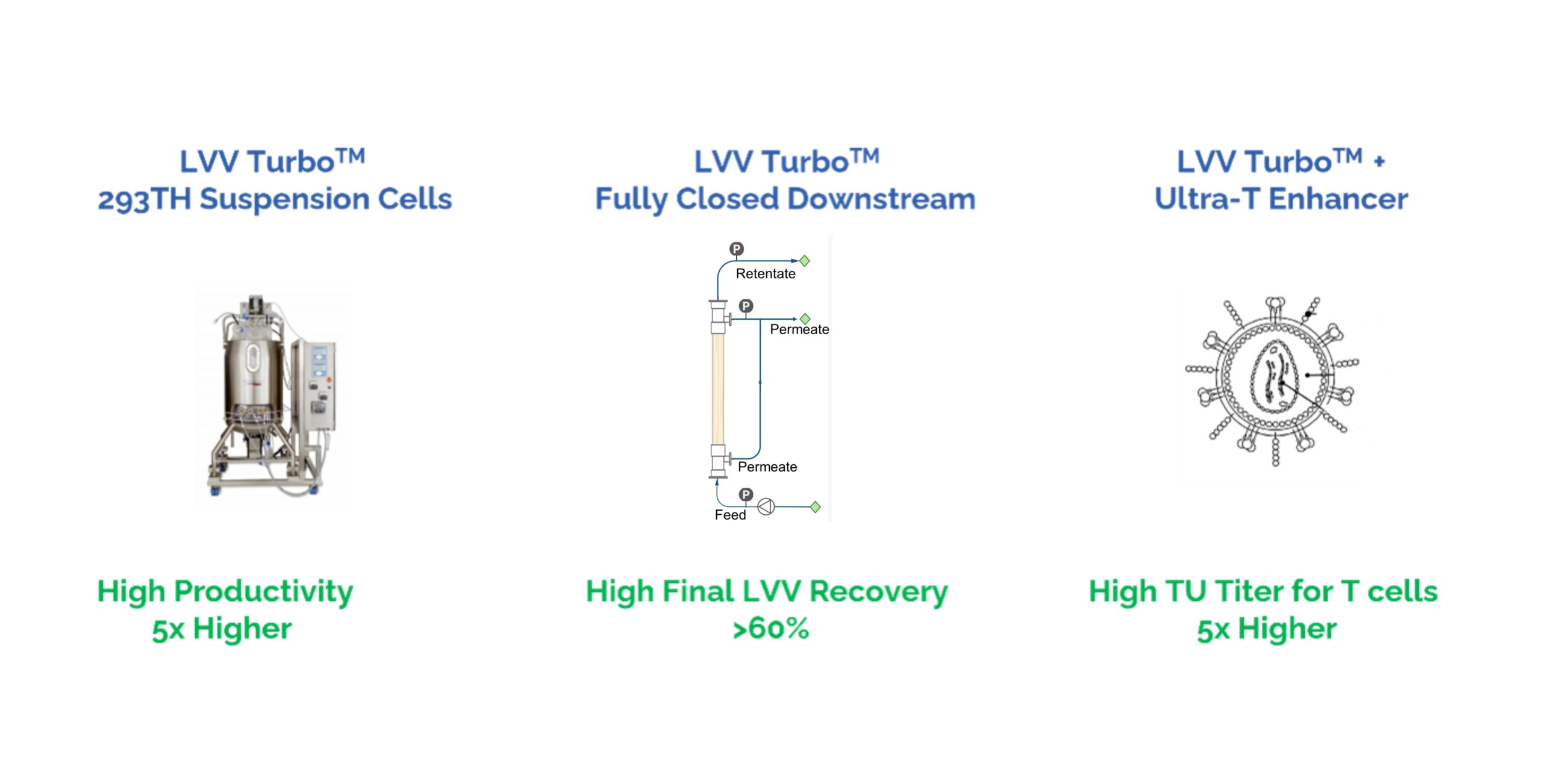
Fig. 1. Diagram of the three disruptive technologies that power our LVV TurboTM platform.
 Schedule a Consultation
uBriGene offers a full suite of in-house and custom lentivirus-specific assays to support lentiviral vector process development and manufacturing, including QC release and stability indicating test methods.
| Test Item | Method | |
|---|---|---|
| Identity | Sanger sequencing* | |
| Physical property | Appearance | Visual inspection |
| Chemical property | pH | pH measurement |
| Content | Physical titer by p24 | ELISA |
| Infectivity | LTI calculation | |
| Transduction titer | Flow cytometry | |
| Purity | Residual host DNA | qPCR |
| Residual plasmid DNA | qPCR | |
| Residual host protein | ELISA | |
| Residual Benzonase | ELISA | |
| Residual host DNA (SV40 Large T antigen) | ddPCR | |
| Residual host DNA (E1A) | ddPCR | |
| Safety | Endotoxin | Gel-clot assay |
| Sterility | Membrane filtration method | |
| Mycoplasma | Culture method | |
| RCL (EOPC & UPB) * | Culture method | |
*Outsourced testing
Request a Consultation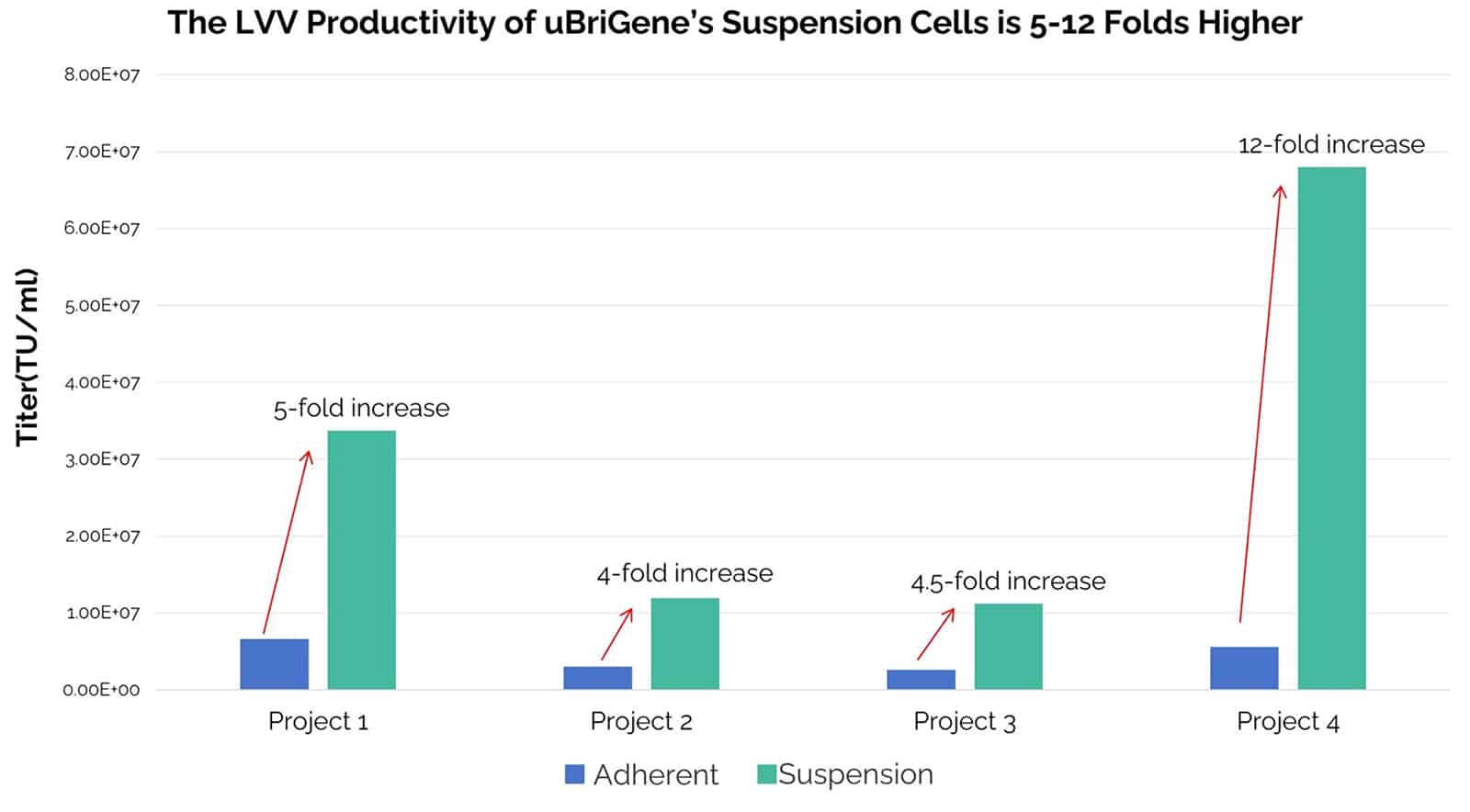
Fig. 2. Comparison of lentivirus productivity of HEK293T adherent cells and uBriGene’s 293TH suspension cells. Four different GOIs were used for this study. The transduction units were analyzed using flow cytometry after transducing Jurkat cells with the lentiviral vectors produced from HEK293T adherent cells and our suspension 293TH cells.
 Request a quote
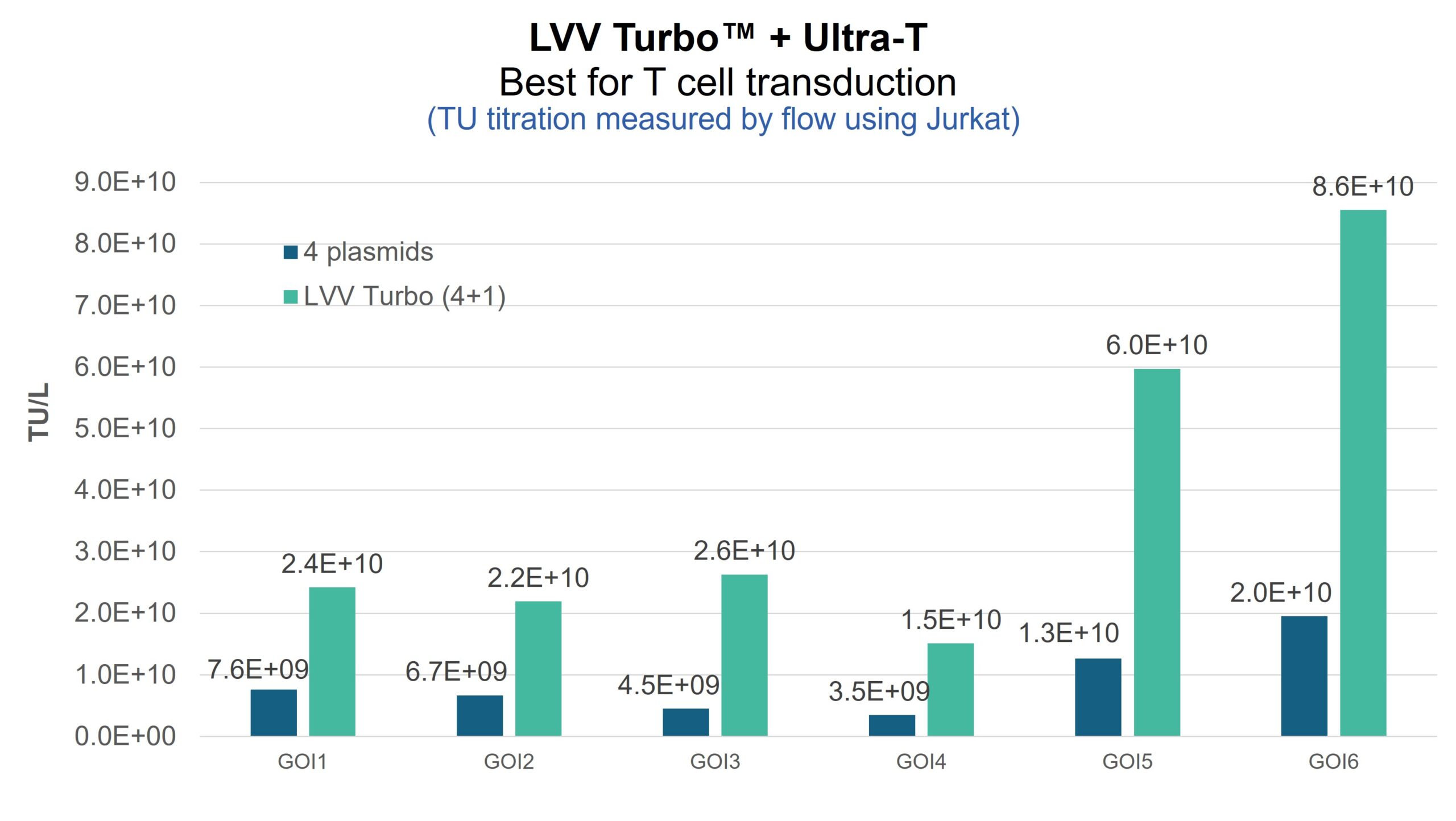
Fig. 3. The figure compares LVV transduction titers produced with the standard 4-plasmid system versus the LVV Turbo™ + Ultra-T System, showing up to a 5× increase in functional titer across six GOIs.
In traditional lentivirus GMP manufacturing, the final sterile filtration step often causes significant vector loss due to the large size of LVV particles.
uBriGene’s fully closed downstream purification platform eliminates this step entirely - ensuring sterility while preserving vector integrity. This innovative process achieves up to 80% final recovery yield, maximizing efficiency and reducing production costs.
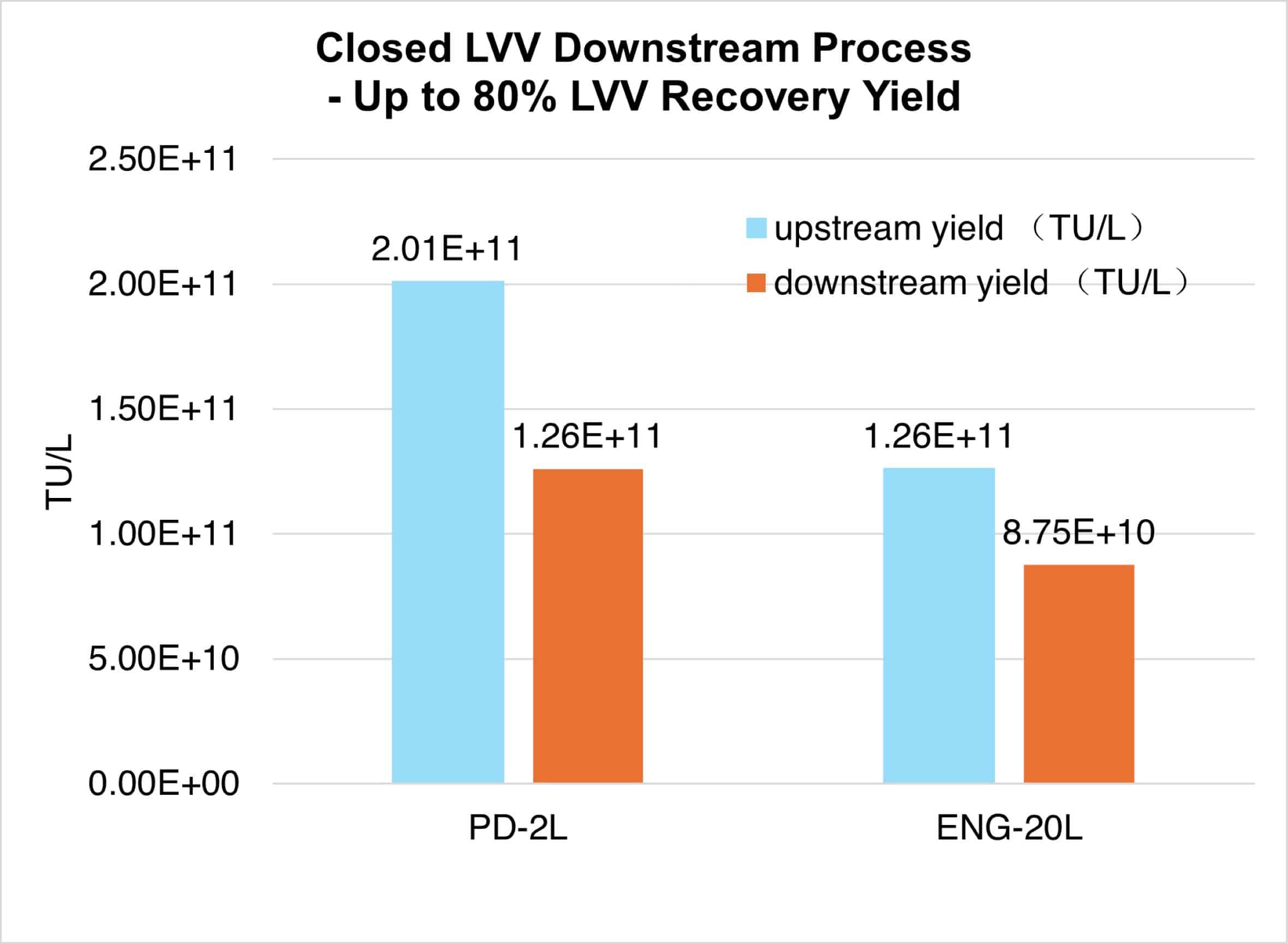
Fig. 4. CAR-T lentiviral vectors were manufactured using our innovative fully closed downstream system at 2 L and 20 L scales, achieving final recovery rates of 63% and 69%, respectively.
uBriGene brings deep technical expertise to your lentivirus production programs. Leveraging uBriGene's established LVV production platform, we can accelerate your therapeutic program into the clinic.
Contact Us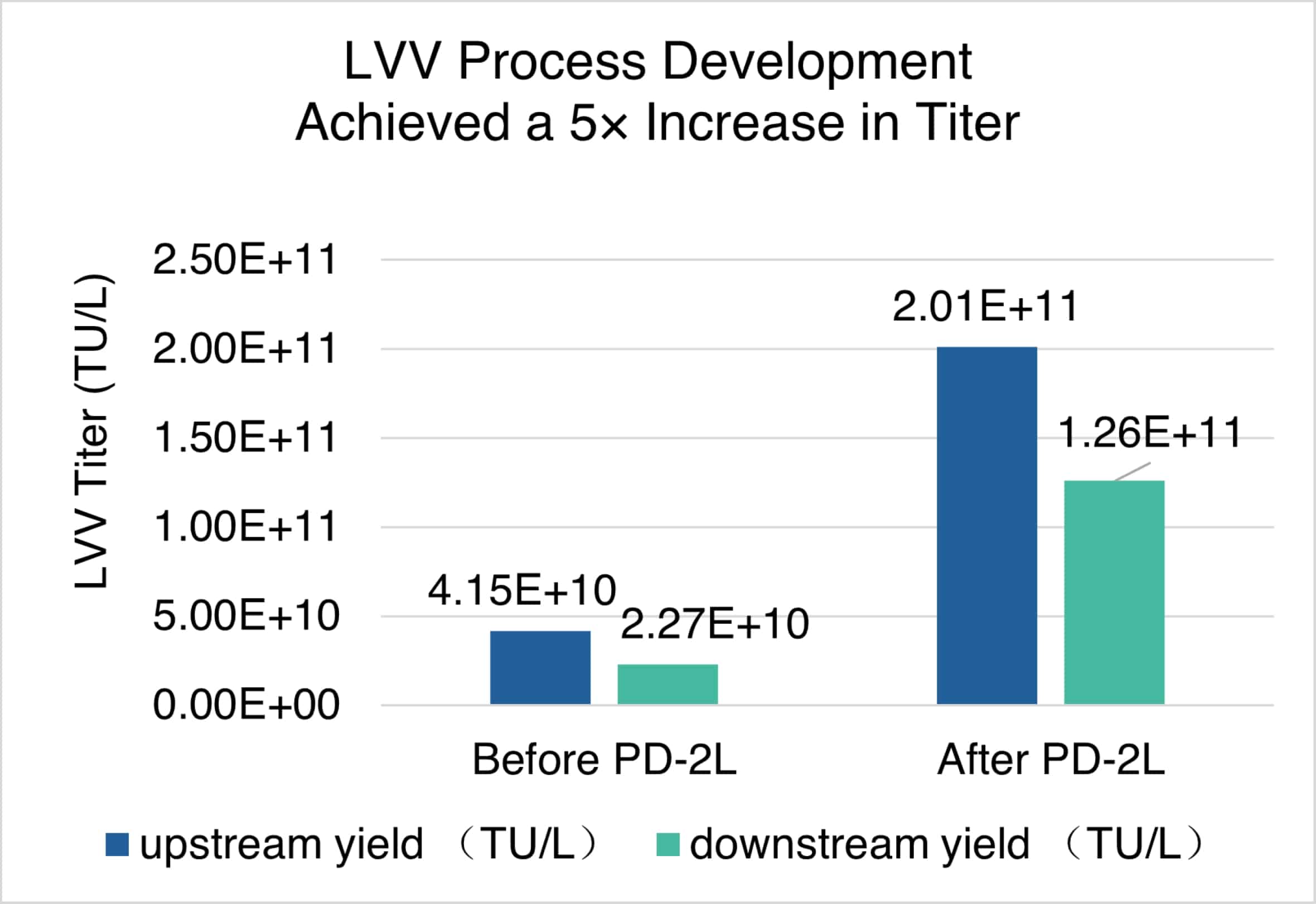
Fig. 5. LVV Turbo™ lentivial vector production platform process development. Through a series of upstream optimizations, the transduction titer has increased by over seven folds.
Discover Lentivirus (LVV Turbo™) production processes and testing
Transforming CAR-T Manufacturing: LVV Turbo™ Breakthroughs Meet Ultra-T Delivery Technology
Learn about CAR-T production process & regulatory guidelines.
Redefining RNA Therapeutics: GMP RNA-LNP Manufacturing You Can Trust
Lentiviral vectors are commonly used for ex vivo cell and gene therapies because they can efficiently deliver genetic material to both dividing and non-dividing cells and can support stable gene expression. They are widely used in applications such as CAR-T and other genetically modified cell therapies. Manufacturing requirements include vector productivity, functional titer, purification, safety testing and control of replication-competent lentivirus.
We provide the third-generation lentiviral packaging systems for improved safety. If you need the second-generation lentivirus production, we can also provide that service.
Yes. uBriGene provides third-generation GMP lentivirus packaging plasmids, including pGagPol, pRev, and pVSV-G, for GMP lentiviral vector manufacturing. The ready-to-use lentivirus plasmids are supported by FDA Drug Master File (DMF) #27777, providing CMC information that may support applicable regulatory submissions.
Sourcing both GMP packaging plasmids from the same GMP LVV CDMO can reduce material-sourcing steps and simplify supply-chain management during GMP LVV development and clinical manufacturing.
Using the LVV Turbo™ platform, GMP lentivirus manufacturing typically takes about two months, not including GMP plasmid production time. Because uBriGene supplies its own DMF-backed GMP helper plasmids in stock (DMF #27777), total program timelines can be shortened versus sourcing plasmids from a separate vendor.
uBriGene operates GMP lentiviral vector manufacturing capabilities in the United States (Germantown, MD; active FDA DMF #31266) and APAC, providing regional manufacturing and technology-transfer support for global development programs. This geographic flexibility allows sponsors to consider manufacturing location as part of their development and regulatory strategy, including programs targeting FDA, NMPA, and other regulatory jurisdictions.
uBriGene performs most lentiviral vector QC and release testing in-house, with the exception of replication-competent lentivirus (RCL) testing, which is outsourced. The QC panel includes identity, p24 physical titer, infectivity, functional transduction titer, residual host-cell DNA, residual plasmid DNA, residual host-cell protein, residual Benzonase, endotoxin, sterility, mycoplasma, and RCL testing.
uBriGene measures functional lentiviral vector transduction titer by transducing Jurkat cells with the lentiviral vectors produced using HEK293T adherent cells or 293TH suspension cells. Transduced cells are then quantified by flow cytometry using an antibody specific to the expressed target.
uBriGene provides GMP plasmid manufacturing to support lentiviral vector production, with production capability reaching gram-scale quantities. The GMP plasmid platform can manufacture the packaging plasmids required for LVV production.
Yes, uBriGene provides both research grade lentivirus packaging and GMP lentivirus production.
uBriGene has completed 60+ GMP lentiviral vector production projects to date, supporting biotech, pharma, and academic programs from early process development through clinical GMP manufacturing.
Standard GMP lentivirus manufacturing typically yields 10-20% overall. uBriGene’s LVV Turbo™ Closed Process eliminates the final sterile filtration step, a step that alone can cause 70%+ vector loss in conventional processes, enabling final recovery yields of up to 80%, which directly reduces cost per dose.
Low lentiviral vector yields and rising manufacturing costs often result from inefficient upstream processes and purification-related vector loss. uBriGene’s LVV Turbo™ platform combines high-productivity suspension cells with a fully closed downstream process to increase functional titers, enable scalable GMP lentiviral vector manufacturing, and reduce cost of goods for cell and gene therapy programs.
uBriGene’s LVV Turbo™ platform supports GMP lentiviral vector production from small clinical batches to 200 L using a fully closed downstream process. A scalable platform approach helps maintain process consistency as programs move from process development to clinical manufacturing, supporting high-yield, high-potency lentiviral vector production without requiring a platform change at each scale.
LVV yield and functional titer can be affected by the production cell line, cell density, culture conditions, plasmid quality and construct design, upstream processing, downstream purification, and process-related vector losses. uBriGene’s LVV Turbo™ platform uses a qualified 293TH suspension cell line, optimized upstream processing, and closed downstream processing. Reported results include up to 5× higher functional transduction titer and up to 80% final vector recovery, depending on production and purification conditions.
T-cell transduction can be influenced by vector characteristics, vector-to-cell exposure, cell state, vector production quality, and interactions between the vector and target cells. uBriGene offers an optional LVV Turbo™ + Ultra-T approach through its partnership with Syenex. In reported studies, the combination achieved up to 5× higher functional T-cell transduction titer than a standard four-plasmid LVV production system under the tested conditions.
GMP LVV manufacturing costs vary based on production scale, vector construct, process-development requirements, GMP plasmid requirements, downstream purification, analytical testing, and final fill and finish scope.
uBriGene’s LVV Turbo™ platform supports GMP LVV production from clinical-scale batches to 200 L, with both adherent and suspension-cell manufacturing options. Because each program has different manufacturing and testing requirements, pricing is provided on a project-specific basis. Request a quote
GMP lentiviral vector CDMO services are designed for biotech companies, pharmaceutical companies and academic or translational research teams developing genetically modified cell or gene therapies. uBriGene supports programs from lentiviral process development through clinical GMP manufacturing, QC testing and regulatory support.
Key factors include adherent and suspension production capabilities, GMP plasmid supply, manufacturing scale, batch experience, analytical and QC capabilities, regulatory documentation, and technology-transfer experience.
uBriGene supports both adherent and suspension LVV manufacturing, provides GMP packaging plasmids supported by FDA DMF documentation (#27777), and performs most LVV QC release testing in-house, except RCL testing. Manufacturing capabilities span the United States and APAC.
End-to-end CDMO services with streamlined timelines and cost-effective processes.
Request Now