Leverage uBriGene’s platform-based adenovirus packaging service with access to extensive skills in adenovirus manufacturing, QC testing, and regulatory support.

uBriGene utilizes a well-established adenovirus packaging process, enabling us to offer adenovirus packaging for discovery and preclinical studies, as well as GMP adenovirus for clinical use. Our comprehensive services include plasmid construction, seed virus packaging, and large-scale adenovirus manufacturing.


| Service | Description | Timeline | Price |
|---|---|---|---|
| Research Grade Adenovirus Packaging | Adenovirus seed virus packaging and adenovirus expansion for discovery and preclinical studies | 2-3 Weeks | |
| GMP Adenovirus Manufacturing | Adenovirus GMP manufacturing for clinical applications | Varies | Please Inquire |

Let’s leverage uBriGene’s extensive expertise in adenovirus packaging, including large-scale amplification and purification capabilities.
Adenovirus packaging begins with adenovirus plasmid construction, followed by virus packaging inside HEK293 cells after plasmid transfection. The adenovirus seed stock is then purified by ultracentrifugation or chromatography.
After the adenovirus seed viruses pass QC release, we can support master virus banking, further amplification and purification for large-scale adenovirus productions.
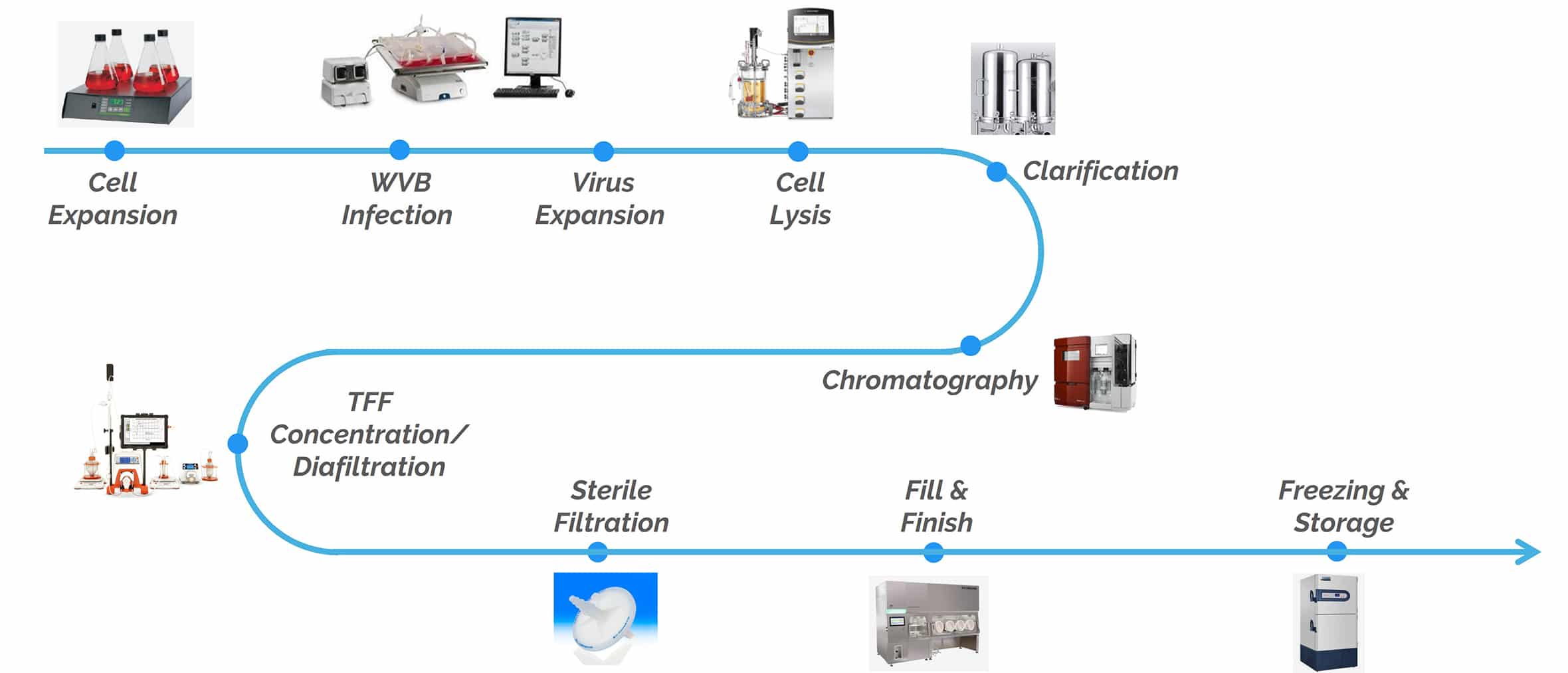
Adenovirus manufacturing/expansion involves virus amplification and purification. Host cells are transduced with seed viruses and expanded to the appropriate scale. After cell lysis and clarification, adenoviruses are purified using density gradient ultracentrifugation, anion exchange (AEX), or size exclusion chromatography. The final adenoviruses are formulated via tangential flow filtration (TFF) and sterilized using 0.22 µm filters.
 Request a quote
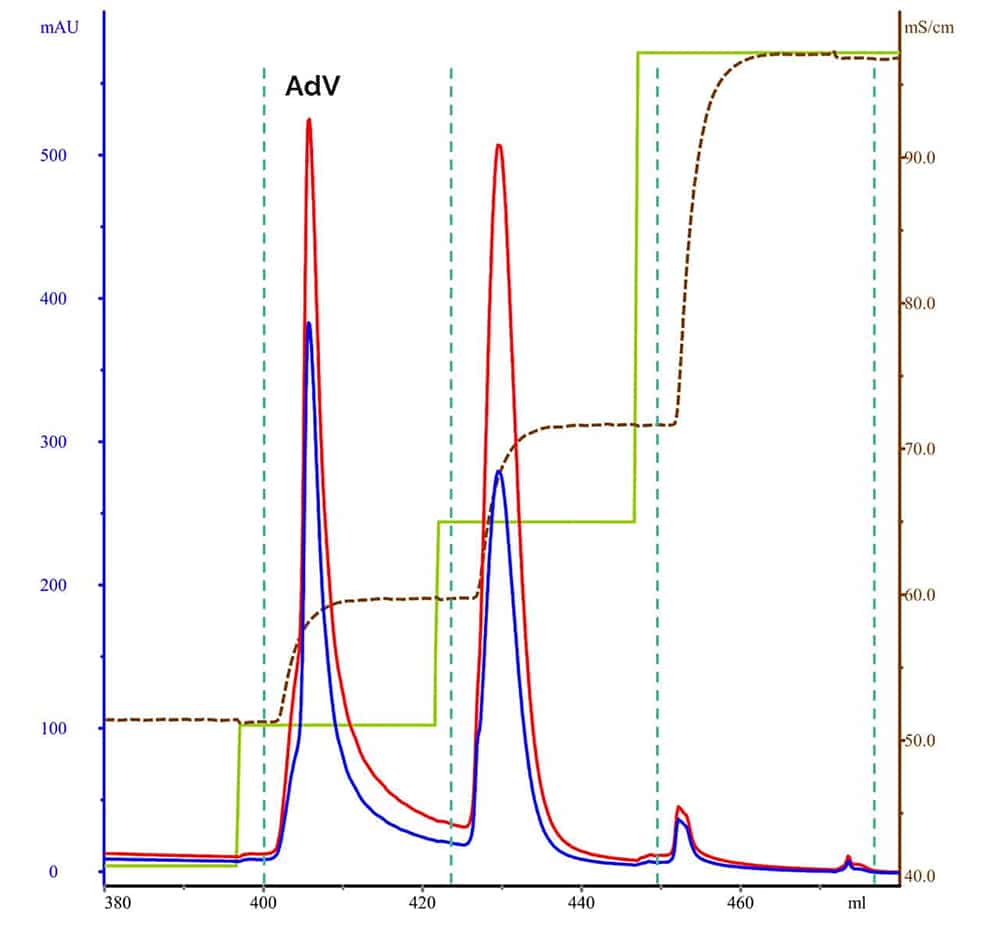
Fig. 1. Adenovirus (AdV) elution profile after AEX chromatographic purification
Request a quoteDiscover how uBriGene supported a client with their oncolytic virus project through crucial stages.
Learn how uBriGene can bridge advanced therapies to clinics.
Learn more about our CAR-T CDMO manufacturing for high-quality therapies.
Redefining RNA Therapeutics: GMP RNA-LNP Manufacturing You Can Trust
Wild-type adenovirus is a non-enveloped virus with a double-stranded DNA genome. Wild-type adenoviruses are replication-competent and can cause mild cold or flu-like symptoms. Recombinant adenovirus is engineered to be replication-deficient.
Recombinant adenovirus is generally engineered to be replication-deficient, but its safety depends on the vector design, inserted genes, manufacturing process, and intended application. Recombinant adenovirus should be handled under appropriate biosafety controls, including BSL-2 practices where applicable. The function of the inserted genes and the specific vector characteristics should be evaluated as part of the safety assessment.
Adenovirus is used in adenovirus-based vaccines for infectious pathogens, oncolytic virus therapy, gene editing, and RNAi therapy.
1. High packaging capacity, up to 7.5 kb, suitable for large genes.
2. High transduction efficiency, achieving nearly 100% transduction.
3. Broad cell spectrum—adenovirus vectors can infect not only common cell lines but also more challenging cells, such as suspension and primary cells.
uBriGene's adenovirus packaging service can include adenovirus plasmid construction, seed virus packaging in HEK293 cells, seed stock QC and release, master virus banking, virus amplification, purification, formulation, and final fill and finish. Purification options include ultracentrifugation, anion exchange chromatography, or size exclusion chromatography. The service supports research and preclinical programs as well as GMP adenovirus manufacturing.
Research-grade adenovirus packaging and expansion typically take 2–3 weeks, depending on project complexity and production requirements. GMP adenovirus manufacturing timelines vary according to the development stage, manufacturing scale, QC requirements, and program-specific specifications.
uBriGene supports adenovirus production from small-scale research-grade packaging and preclinical batches through large-scale manufacturing and GMP production. Both adherent and suspension production systems are available, with the manufacturing scale tailored to the vector, process requirements, and intended application.
We use multiple quality control methods, including sequencing, titer determination, and sterility testing, to ensure the adenoviruses are free from contaminants and meet your specifications.
Yes. uBriGene provides GMP adenovirus manufacturing for clinical applications, supported by established adenovirus packaging, amplification, purification, QC testing, and regulatory support capabilities. The platform also supports process development and master virus banking for programs progressing toward clinical manufacturing.
uBriGene's adenovirus workflow begins with plasmid construction and virus packaging in HEK293 cells, followed by seed stock QC and master virus banking. For larger-scale production, seed viruses are used to amplify adenovirus in host cells, followed by cell lysis, clarification, purification by ultracentrifugation or chromatography, TFF formulation, and 0.22 μm filtration.
Yes. uBriGene supports recombinant adenovirus and oncolytic adenovirus manufacturing for research, preclinical, and GMP programs. Services can include plasmid construction, virus packaging, seed stock QC and banking, process development, amplification, purification, and GMP manufacturing according to program requirements.
uBriGene uses multiple QC methods for adenovirus products, including sequencing, viral titer determination, and sterility testing. The company also provides analytical method development and validated QC testing, with the final testing strategy tailored to the adenovirus product and manufacturing stage.
Established Processes for high quality and yield
R&D grade & GMP Adenovirus productions