Robust GMP iPSC and MSC manufacturing platforms offering access to qualified raw materials, including reprogramming mix and CRISPR gene editing.
Our CDMO platforms for mesenchymal stem cell (MSC) and iPSC manufacturing bring extensive expertise in GMP-compliant cell therapy product development. Our CDMO services include advanced stem cell production techniques, rigorous quality testing, and comprehensive IND application support.
Access to our efficient iPSC reprogramming kit and CRISPR gene editing tools greatly facilitates iPSC generation.


Optional caption section: This caption text can be used under any image or content block as-needed. Use cases are figure legends, citations, image descriptions
Extensive mesenchymal stem cell (MSC) and iPSC manufacturing experience with access to essential raw materials, including iPSC reprogramming kit and CRISPR gene editing tools.
These advantages not only improve the efficiency and reliability of the manufacturing process but also ensure a more cost-effective production of cells.
Consult with us for seamless IND submissions, regulatory compliance, and cutting-edge technology in CAR-NK and CAR-T CDMO manufacturing services.
Ask the iPSC & MSC Expert
Optional caption section: This caption text can be used under any image or content block as-needed. Use cases are figure legends, citations, image descriptions
We offer customizable stem cell production services tailored to specific research or therapeutic needs. This includes donor cell selection, iPSC reprogramming optimization or mesenchymal stem cell isolation, cell banking, and process and analytical method development based on project requirements.
Our quality control testing includes rigorous testing for cell identity, purity, potency, and safety. Additionally, our regulatory affairs team can support IND filing.

Scope of work Diagram for iPSC and MSC manufacturing
Request a quoteStreamline your process with our one-stop services, including donor cell sourcing, iPSC generation using uBriGene’s innovative reprogramming RNA-LNP cocktail, and iPSC gene modification via CRISPR gene editing with our GMP-grade Cas9 proteins or RNP. After iPSC monoclonal screening, we assist with iPSC master cell banking and differentiation into specialized cell types.
After transduction, the modified CAR cells undergo expansion in bioreactors or culture bags to achieve a sufficient quantity for treatment. The process concludes with washing, harvesting, formulation, and cryopreservation, maintaining sterility through aseptic filling techniques. Comprehensive quality control tests are conducted throughout to ensure compliance with GMP standards. Additionally, our platform includes the optimization of protocols to improve process closure and adaptation from academic or research-grade processes to GMP standards.
 Connect With Our CDMO Experts
 uBriGene’s innovative RNA-LNP iPSC reprogramming kit is easy to use and can be directly added to somatic fibroblast or PBMC cells, with no virus or transfection required. The iPSC generation efficiency with this reprogramming RNA-LNP mix is around 1-5%, depending on cell sources, significantly higher than other available iPSC reprogramming reagents.
Our quality control testing includes rigorous testing for cell identity, purity, potency, and safety. Additionally, our regulatory affairs team can support IND filing.
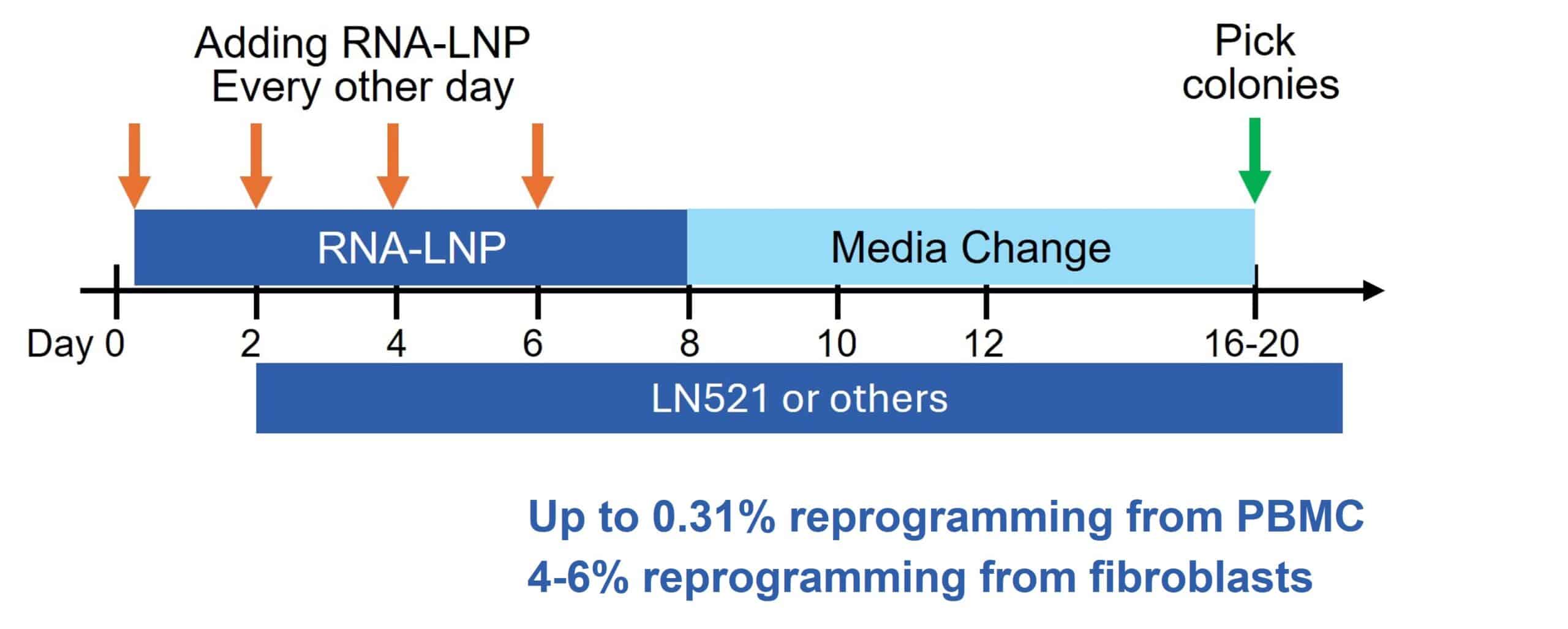
Fig. 1. iPSC reprogramming diagram for PBMCs using uBriGene’s RNA-LNP iPSC reprogramming kit.
Request a quoteThe significance of our typical MSC (Mesenchymal Stem Cell) production process workflow lies in its integrated, one-stop comprehensive service, ensuring efficiency, consistency, and quality at every stage of GMP stem cell manufacturing. This includes tissue sample collection, stem cell separation and amplification, cell bank construction, MCB verification, large-scale stem cell production, harvest and aseptic filling, followed by quality inspection and product release.

Mesenchymal stem cell (MSC) GMP manufacturing workflow diagram
Request a quoteAt uBriGene, we uphold the highest standards of quality control and assurance throughout our GMP iPSC/MSC manufacturing process, ensuring that every product meets stringent criteria for safety, purity, and efficacy.
| Test Item | Assay |
|---|---|
| Sterility | Immersion sterility tests(B/F) |
| Mycoplasma Testing | Culture and cell indication assay |
| Endotoxin | Kinetic chromogenic LAL |
| Cell Viability | Trypan blue |
| Pluripotency Characteristics | Flow cytometry |
| Embryoid body formation | |
| Genetic stability | STR genotyping |
| Karyotype analysis | |
| Viral factor inspection | Transmission electron microscopy (TEM) |
| In vitro assay for adventitious virus contaminant | |
| Fluorescent Product Enhanced Reverse Transcriptase (FPERT) method |
*Outsourced testing
Begin Your Development JourneyStem cell production undergoes rigorous testing using advanced techniques to ensure regulatory compliance and exceed customer expectations. Testing is conducted at every stage, from raw material sourcing to final GMP-grade iPSCs release, including but not limited to the following tests:
Identity and Purity Testing: Ensuring the genetic integrity and purity of our iPSC lines.
Sterility Testing: Confirming the absence of microbial contaminants.
Viability and Proliferation Assays: Assessing the health and proliferative capacity of our iPSCs/MSCs.
Genetic Stability Assessment: Monitoring for genetic alterations during expansion and passaging.
The advantages of membrane matrix in downstream chromatography for plasmid purification include requiring only 30% of the time compared to conventional resin. Therefore, plasmid DNA is manufactured faster and at a much lower cost.
At uBriGene, we uphold the highest standards of quality control and assurance throughout our GMP iPSC/MSC manufacturing process, ensuring that every product meets stringent criteria for safety, purity, and efficacy.

Discover how uBriGene accelerates iPSC-based therapeutics and cell therapies.
Learn about uBriGene’s iPSC banking and reprogramming capabilities.
Unveil the current manufacturing approaches for LVV and its deployment in cell therapies.
Explore our cGMP MSC & Exosome capabilities
Learn about CAR-T production process & regulatory guidelines.
We provide comprehensive GMP manufacturing services, including donor screening, iPSC generation, MSC production, GMP cell bank manufacturing, process development, quality control, and regulatory support. Our services also include analytical method development and GMP-grade production for clinical applications.
uBriGene supports RNA-LNP-based iPSC reprogramming and GMP-grade CRISPR components, including Cas9 nuclease, Cas9 mRNA, and sgRNA production. uBriGene also provides CRISPR gene editing services as part of its GMP iPSC manufacturing capabilities.
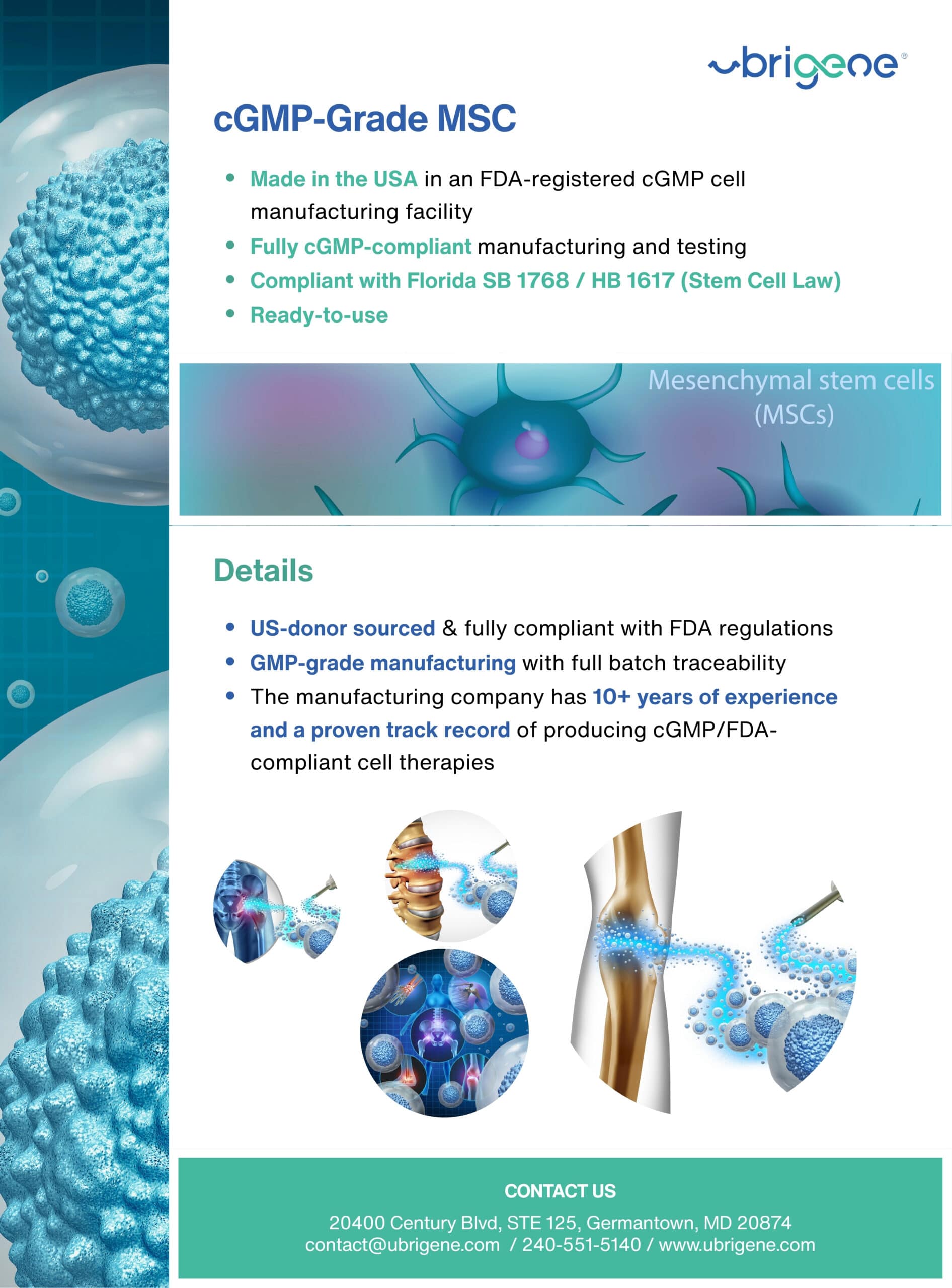
Mesenchymal stem cells (MSCs) are multipotent stromal cells that can be isolated from sources such as adult or neonatal tissues. They are being investigated for applications including regenerative medicine, immunomodulation and cell-based therapies. GMP MSC manufacturing requires controlled isolation, expansion, banking, characterization and release testing.
Yes, we offer customizable production services, including donor cell selection, protocol optimization, and comprehensive cell banking (MCB, WCB) under GMP conditions.
uBriGene's iPSC and MSC quality-control program can include identity, purity, viability, sterility, mycoplasma, endotoxin, pluripotency, genetic stability, karyotype and adventitious-virus testing. The exact testing package is tailored to the cell type, manufacturing process and intended regulatory use.
The timeline depends on donor material, cell processing, reprogramming or isolation, expansion, cell banking, analytical development and release testing. iPSC programs can take weeks to months and MSC production generally takes several weeks. Programs using uBriGene’s in-house RNA-LNP reprogramming kit can shorten the initial reprogramming phase versus assembling a multi-vendor process. Regulatory support is available for clinical development and submissions.
Yes. uBriGene supports adherent and suspension cell processing and uses controlled manufacturing processes, bioreactor-based systems and automation where appropriate. Its GMP platform is designed to improve scalability, reproducibility and process control.
We provide comprehensive documentation, including batch records and certificates of analysis, for regulatory submissions.
Genetic stability is assessed during cell expansion and banking using methods such as karyotype analysis, STR genotyping, SNP analysis, and other appropriate genetic characterization methods. These tests help identify chromosomal abnormalities or genetic changes that may arise during cell expansion and support characterization of the cell bank and manufactured cell product.
Yes. uBriGene supports iPSC differentiation programs for specific cell types, including cardiomyocytes, neurons and hepatocytes, depending on project requirements and intended application.
uBriGene uses standardized SOPs, controlled batch records, defined process parameters, quality-control testing and routine quality-system oversight to support reproducibility across GMP cell-manufacturing batches. Process and analytical methods can also be developed or optimized for individual programs.
Yes. uBriGene provides regulatory support for cell therapy programs and has experience supporting submissions involving major agencies, including the FDA, EMA, NMPA and TGA
uBriGene supports GMP iPSC and MSC development programs across multiple regulatory jurisdictions, with quality systems aligned to applicable requirements from the U.S. FDA, EMA, Health Canada, TGA, and NMPA. Its GMP facilities in North America and Asia support regional manufacturing and technology transfer for global development programs. The Germantown, Maryland facility maintains FDA DMF #31266, and products tested at the site have supported FDA IND submissions and clearances.
GMP iPSC manufacturing focuses on reprogramming somatic cells into pluripotent stem cells, characterization, expansion, and establishment of qualified cell banks, while GMP MSC manufacturing typically involves donor tissue or cell sourcing, MSC isolation, expansion, banking, and large-scale production. The two manufacturing processes also use different identity, purity, potency, genetic-stability, and safety testing strategies based on the characteristics of each cell type.
Cost depends on donor sourcing complexity, reprogramming method, and cell banking scope (MCB/WCB). uBriGene’s in-house RNA-LNP reprogramming kit and CRISPR tools are designed to reduce reliance on external vendors and lower overall program cost. Contact us for a project-specific quote.
Method selection depends on the starting cell type, reprogramming efficiency, genomic-integration considerations, viral clearance requirements, scalability, and downstream manufacturing strategy. RNA-LNP reprogramming provides a non-viral approach that does not rely on integrating viral vectors and does not require extended passaging for Sendai virus clearance. uBriGene offers RNA-LNP reprogramming kits for fibroblasts and PBMCs in research and GMP grades.
Take the next step in your CAR journey. Discuss your project requirements and see how our CAR-NK & CAR-T CDMO services can support your goals.
Extensive stem cell manufacturing expertise
Access to efficient iPSC reprogramming kit
Access to CRISPR gene editing tools and services
Sit aliquam elit vitae bibendum lectus blandit dictum. Nisi porta elementum sed diam eleifend pellentesque. Quis aenean quam.
Request a Quote
Optional caption section: This caption text can be used under any image or content block as-needed. Use cases are figure legends, citations, image descriptions
Ask the plasmid DNA expert! With over 300 GMP batches in our track record and our cost-effective platform technology, we can help accelerate your clinical programs.