uBriGene’s scalable Lentivirus packaging services deliver high quality, potent lentiviral particles for your discovery and animal studies.

uBriGene’s proprietary lentiviral packaging cell line and optimized processes produce lentivirus with higher purity and infectious titer, delivering faster and more cost-effective results than industry standards. We support your team’s needs at every phase of your program.



As an experienced lentivirus CDMO provider, uBriGene supports your lentivirus packaging discovery and preclinical needs with scalable and optimized production processes.
Request a Quote| Service | Description | Timeline | Price |
|---|---|---|---|
| Regular Scale Lentivirus Packaging, E7 TU/mL | Research grade lentivirus packaging services, E7 TU/mL, with flexible volumes ranging from 200 µL to mL. | 2-3 Weeks | |
| Large Scale Lentivirus Packaging, E8 TU/mL | Research grade lentivirus packaging services, E8 TU/mL, with flexible volumes ranging from 500 µL to mL. | 2-3 Weeks | Request a Quote |
| Preclinical Lentivirus Packaging, E9 TU/mL | Preclinical lentivirus packaging services, E9 TU/mL, with flexible volumes ranging from 200 µL to mL. | 3-4 Weeks | |
| GMP Lentivirus Manufacturing | GMP lentiviral vector manufacturing | Varies | View Details |

In third generation (or 4-plasmid) lentiviral vector systems, the packaging system genes are separated into three plasmids, leading to the production of non-pathogenic, non-immunogenic lentivirus.
As an added safety measure, the LTRs are engineered to make the vectors "self-inactivating (SIN)", minimizing the risk of generating replication competent lentivirus. The HIV envelope gene is typically replaced with the heterologous VSV-G coat protein, which broadens the range of transducible cell types and increases viral stability.
The uBriGene lentivirus packaging service platform implements a 3rd generation (4-plasmid) lentivirus workflow using our proprietary upstream and downstream cell lines, reagents, and processes.
The value to our clients is virus stocks of exceptional purity, quality, and cryostability which provide high efficiency payload delivery into even the hardest-to-transfect target cells.
uBriGene’s optimized lentivirus production processes deliver not only a high overall yield but also highly potent lentiviral vectors. Our two-step chromatography purification process ensures both high yield and potency of the lentiviral vectors.
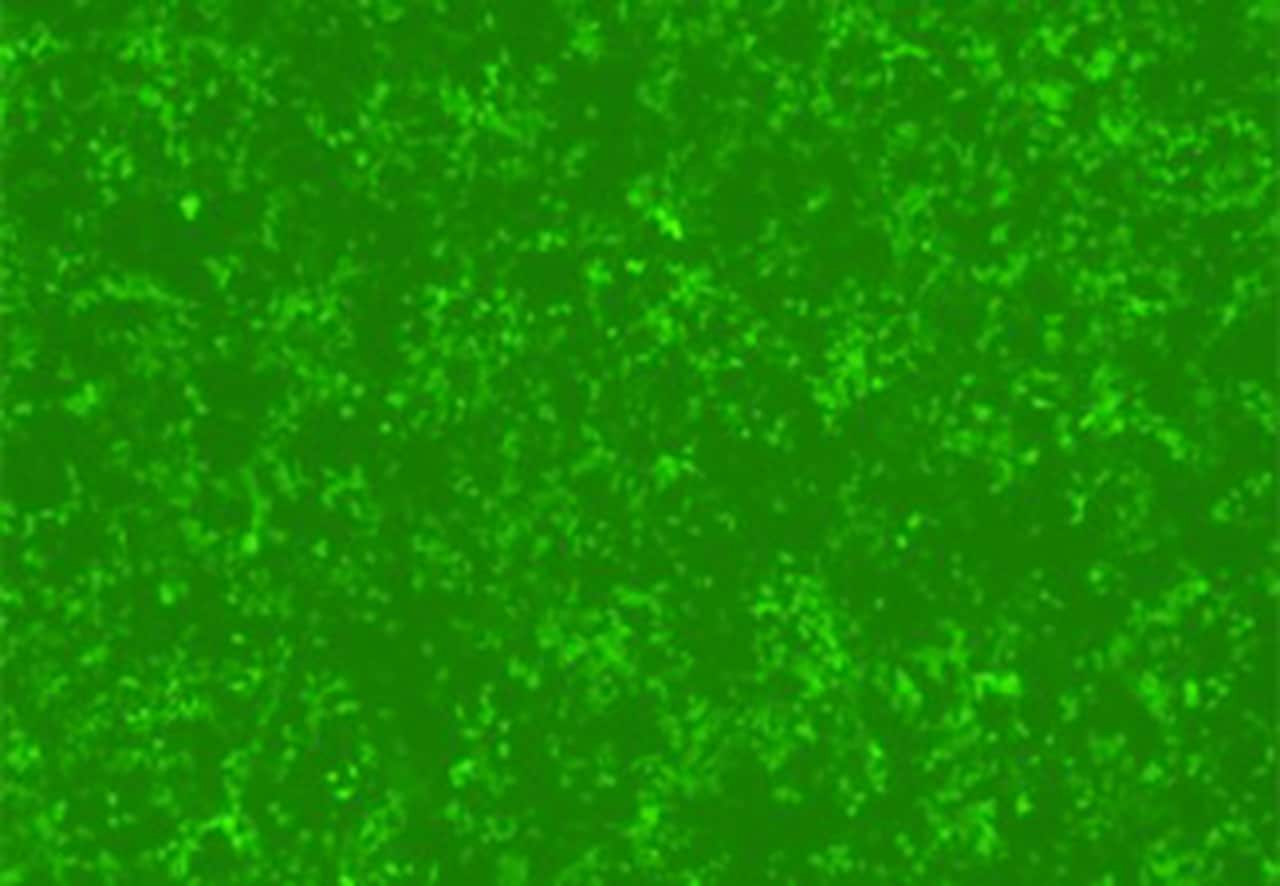
293T cells were transduced by chromatography purified NeonGreen lentiviral vectors. Fluorescence image taken 24 hours post transduction.
Request a quoteUnveil the current manufacturing approaches for LVV and its deployment in cell therapies
Learn about CAR-T production process & regulatory guidelines.
Learn about uBriGene’s RNA and LNP manufacturing capacities and testing.
Discover our GMP plasmid manufacturing process and testing.
A cell will serve as a target for lentivirus transduction if it has cell surface receptors of adequate density and affinity for the env protein being expressed by a given lentivirus. Often recombinant lentiviruses are engineered to express the heterologous VSV-G env protein on the surface, resulting in broad species and cell-type transduction. The choice of the ideal env to incorporate into a given lentivirus is dictated by the target cell type being studied.
The two key safety concerns are replication-competent lentivirus (RCL) and the potential for insertional mutagenesis/oncogenesis due to genomic integration. uBriGene uses third-generation, self-inactivating (SIN), replication-defective lentiviral systems and applies RCL testing and other safety controls. Lentiviral work is generally conducted under BSL-2 conditions, with appropriate controls based on the intended application.
Lentiviral titer can be measured as physical titer or functional titer. Physical methods include p24 ELISA and RT-PCR/qPCR, while functional titer measures transduction of target cells using methods such as flow cytometry. uBriGene uses cell-based functional transduction assays to evaluate infectious lentiviral titer.
Lentivirus are prone to losing viability (functional titer) upon cryopreservation and during repeated freeze/thaw (F/T) cycles. uBrigene has developed cryopreservation methods and reagents which lead to more robust lentiviral particles with enhanced –80°C and 4°C viability, resulting in greater experimental reproducibility.
Key considerations include the gene of interest (GOI), promoter, insert size, expression level, and intended application. For gene overexpression, promoter selection and GOI orientation are important; for shRNA applications, appropriate shRNA design and expression elements are required. The transfer-plasmid architecture should also remain compatible with the lentiviral packaging system.
Multiplicity of infection, number of genomic or infectious particles per cell. The optimal lentivirus MOI varies by cell line. For each cell line, test a range of MOIs from 5 to 100 using positive lentiviral control particles containing a fluorescent protein marker, such as uBriGene's GFP control lentivirus.
Lentiviral vectors can accommodate relatively large genetic payloads and integrate into the host genome, supporting long-term gene expression. Most recombinant lentiviruses are pseudotyped with the VSV-G envelope protein, which provides broad cell tropism and enables transduction of many cell types. Lentiviral vectors are therefore widely used for gene overexpression, RNA interference, CRISPR gene editing, and cell and gene therapy research.
Our lentiviral packaging system is 3rd generation; we can accommodate 2nd generation lentivirus packaging services if client brings packaging plasmids.
No. uBriGene provides third-generation lentiviral packaging plasmids as part of its lentivirus packaging service and also offers off-the-shelf GMP-grade lentiviral packaging plasmids with activated FDA DMF on file #27777. Clients can provide their own transfer plasmid or GOI sequence, and uBriGene can perform molecular cloning into a lentiviral transfer-plasmid backbone. For larger-scale packaging, additional plasmid DNA can be supplied through uBriGene's plasmid production service.
Lentiviruses have a complex genome with long terminal repeat sequences (LTRs) at both ends. Lentiviral genome contains three structural genes—gag, pol, and env—and six regulatory genes: tat, rev, nef, vif, vpr, and vpu. The gag gene encodes core viral proteins such as the nucleocapsid, matrix, and capsid proteins. The pol gene encodes enzymes essential for viral replication, while the env gene encodes viral envelope glycoproteins. The six regulatory genes are crucial for viral packaging and regulation.
uBriGene supports regular-scale lentivirus packaging at approximately E7 TU/mL, large-scale packaging at E8 TU/mL, and preclinical production at E9 TU/mL. Regular- and large-scale services typically have 2–3 week timelines, while preclinical production is listed at 3–4 weeks, with flexible production volumes from hundreds of microliters to milliliter scale.
uBriGene uses a third-generation, four-plasmid lentiviral packaging system in proprietary producer cells. The workflow includes plasmid co-transfection, lentivirus harvest, purification, cryopreservation, and titer/QC assessment. Downstream purification can use ultracentrifugation or chromatography, with uBriGene's two-step chromatography process designed to support high yield and potency.
Yes. uBriGene supports customizable lentivirus packaging, including novel pseudotyped lentiviral vectors. Pseudotype selection can be tailored to the target cell type and desired transduction characteristics, and downstream target-cell transduction services are also available.
Yes. uBriGene supports lentivirus programs from research and preclinical packaging through GMP lentiviral vector manufacturing. Its platform provides access to research- and GMP-grade lentiviral packaging plasmids, including plasmids supported by FDA DMF #27777, and can support process development and scale-up for programs progressing toward clinical manufacturing
High potent lentiviral vectors produced
Optimized lentivirus packaging processes & Cost-effective