Oncolytic virus manufacturing platform services with experience producing vaccinia virus, adenovirus, and herpesvirus oncolytic vector systems.

As a leading oncolytic virus CDMO, we support seed virus production, tech transfer, process and analytical method development, clinical GMP manufacturing, and aseptic fill and finish.
In addition, we offer production of qualified GMP cell banks (and GMP plasmids, if required) to support GMP oncolytic virus manufacturing. Our extensive analytical and regulatory capabilities offer additional support for oncolytic process development, scale-up, and GMP-readiness to ensure effective product release and regulatory filing.


| Service | Timeline | Price |
|---|---|---|
| Research grade & preclinical oncolytic virus productions | 2-3 Weeks | Please Inquire |
| GMP grade oncolytic virus process development, production, and QC testing | Please Inquire |
Comprehensive oncolytic virus CDMO services
Client oriented partnership

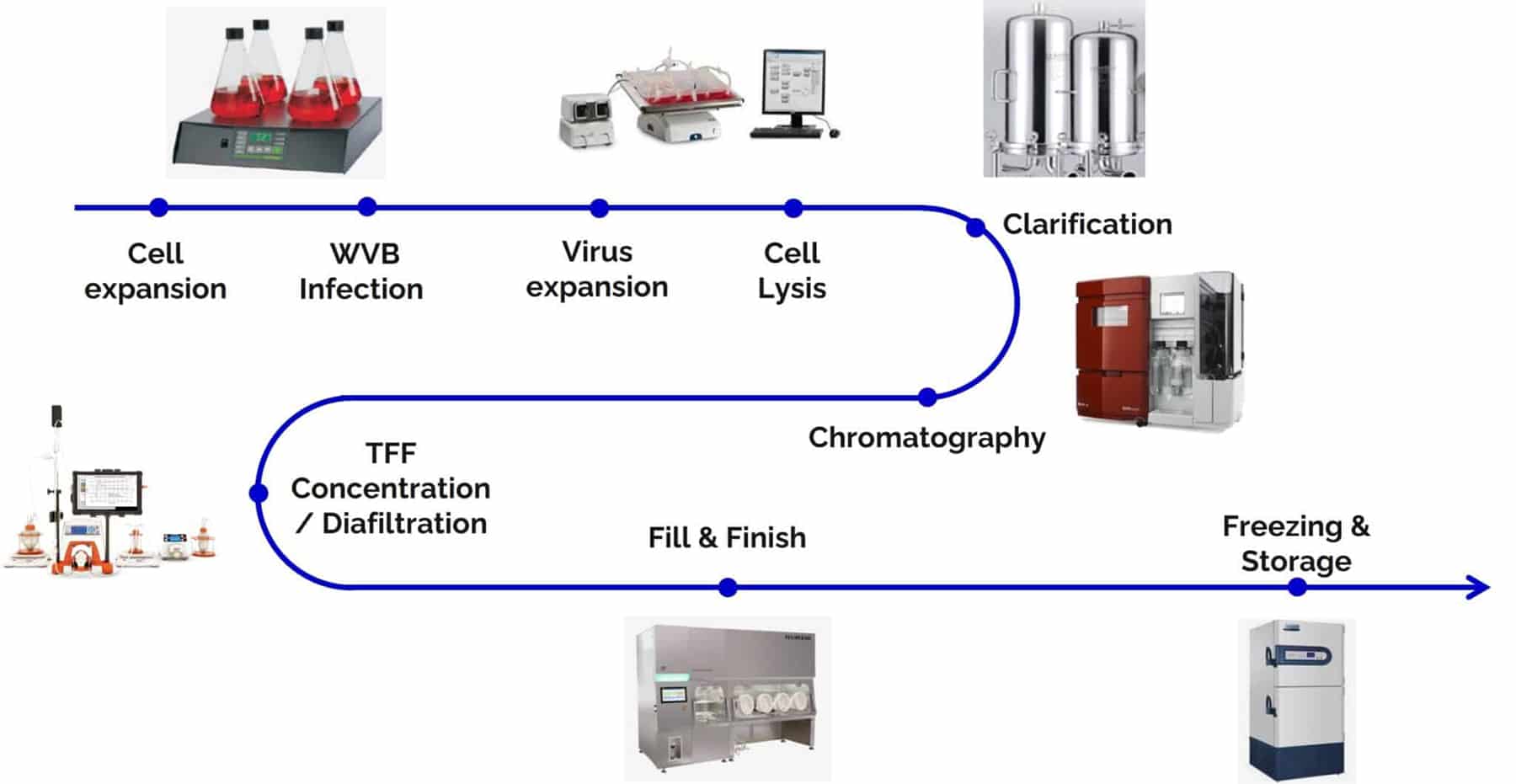
Oncolytic virus manufacturing comprises virus amplification and purification, often involving transduction of host cells with seed viruses and expansion to target scale. After cell lysis and clarification, many oncolytic viruses are purified with density gradient ultracentrifugation, anion exchange (AEX), or size exclusion chromatography. The final oncolytic viruses are formulated using Tangential Flow Filtration (TFF).
We offer a full suite of in-house oncolytic virus QC release tests. uBriGene’s analytical teams can support development of virus specific analytical assays.
| Test Item | Method | |
|---|---|---|
| Physical/Chemical Properties | Appearance | Visual inspection |
| pH | pH measurement | |
| Identity | Sequencing | Sanger/NGS |
| Target Protein | Western Blot | |
| Morphology and Structure | EM | |
| Titer | Genome Titer(vg) | qPCR |
| Infectious Titer(PFU) | Plaque Assay | |
| Purity | Purity | AUC |
| Potency | Target Cell Killing | CCK8 assay |
| Tumor Specificity | CCK8 assay | |
| Virus Replication | Plaque Assay | |
| Target Protein Expression | WB/ELISA | |
| Residuals | Host Protein Residuals | ELISA |
| Host DNA Residuals | qPCR | |
| Nuclease Residuals | ELISA | |
| E1A Residuals | qPCR | |
| Safety | Sterility | Membrane Filtration |
| Mycoplasma | qPCR | |
| Wild Type Virus | Sanger sequencing | |
*Outsourced testing
Request a Consultation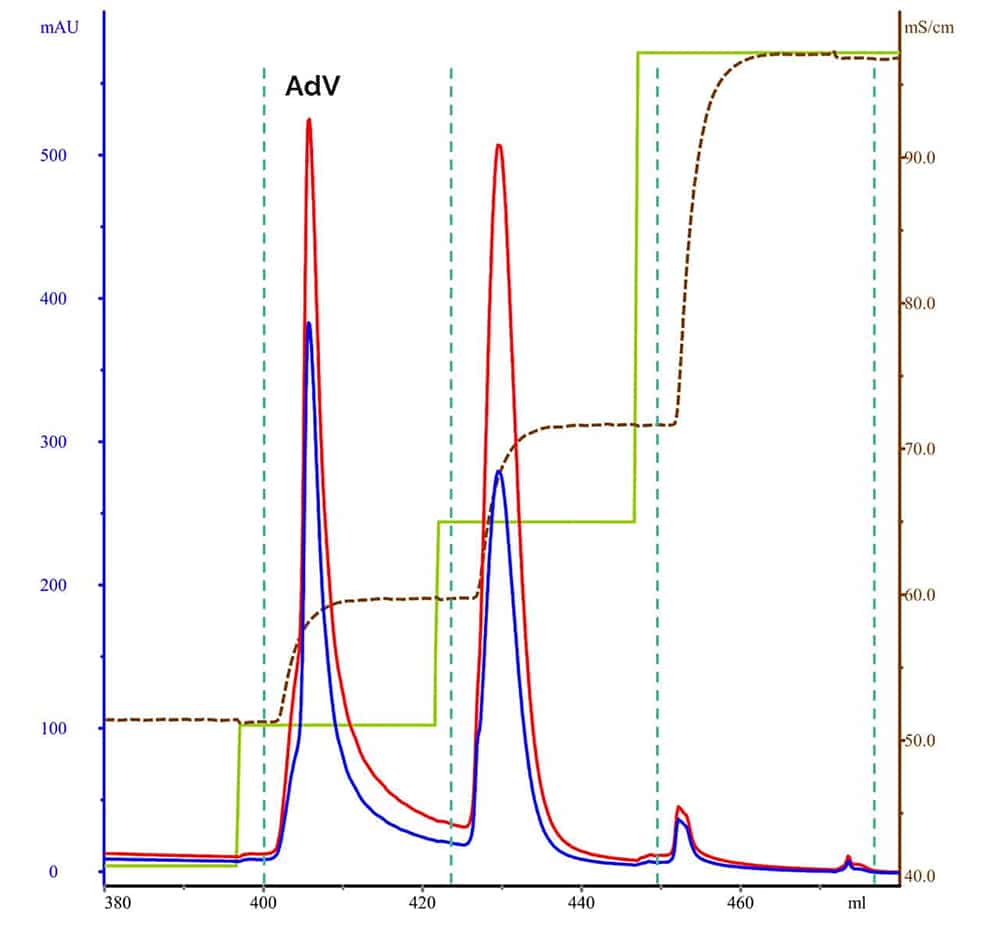
Fig. 1. Adenovirus (AdV) elution profile after AEX chromatographic purification
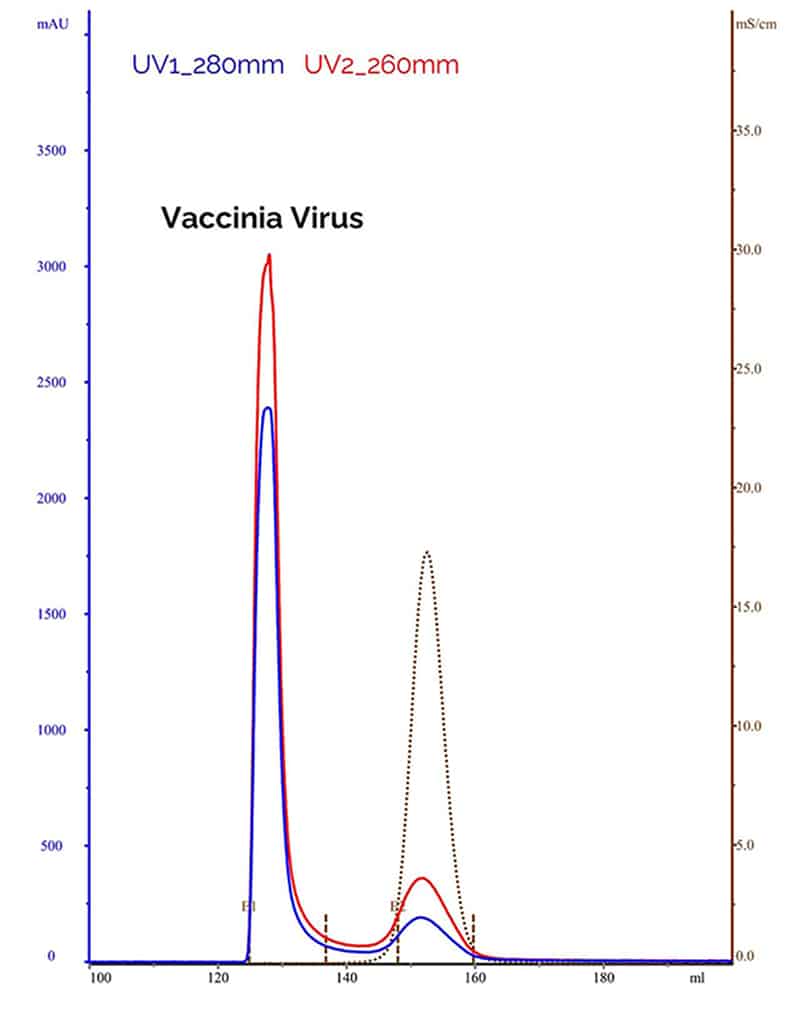
Fig. 2. Vaccinia virus elution profile after SEC purification
Discover how uBriGene collaborated with a client to develop processes and manufacture vaccinia virus.
Discover our GMP plasmid manufacturing process and testing.
Discover Lentivirus (LVV) production processes and testing.
Learn about CAR-T production process & regulatory guidelines.
The timeline for a GMP oncolytic virus program depends on virus type, starting material, cell substrate, process development, analytical methods, manufacturing scale, and regulatory testing. uBriGene indicates that Master Virus Bank (MVB) preparation can take approximately one month, while the complete development-to-GMP timeline depends on the individual program scope.
uBriGene currently reports an overall final recovery of approximately 30% after sterile filtration for its GMP oncolytic virus manufacturing process. Actual recovery depends on the virus type, production process, purification strategy, formulation, and filtration conditions, so recovery should be evaluated using a defined product-specific measurement such as infectious titer or genome titer.
Yes. uBriGene supports oncolytic virus programs from research and preclinical development through GMP manufacturing. Services can include process development, analytical method development, cell and virus banking, technology transfer, scale-up, GMP production, QC testing, and regulatory support according to program requirements.
Oncolytic virus therapy uses viruses that are engineered or selected to preferentially infect and destroy tumor cells while also potentially stimulating antitumor immune responses. The degree of tumor selectivity and safety depends on the specific viral platform, genetic design, target tumor, dose, and administration strategy.
uBriGene supports manufacturing of multiple oncolytic virus platforms, including adenovirus, herpes simplex virus (HSV), and vaccinia virus. uBriGene has completed 10+ GMP vaccinia-virus manufacturing batches.
uBriGene supports both adherent and suspension host-cell systems, with the cell substrate selected according to the specific oncolytic virus and manufacturing process. For example, uBriGene's vaccinia-virus development work has used its 293XS suspension-cell platform, which has been evaluated for scalability and process control.
Yes. uBriGene supports process development and scale-up for oncolytic virus manufacturing, with its platform currently supporting production scales up to 200 L. The appropriate scale and process configuration depend on the virus, host cell, production method, target batch size, and clinical requirements.
uBriGene supports GMP oncolytic virus programs within quality systems designed to meet applicable regulatory requirements for the intended development program and market. Support can include controlled manufacturing, analytical testing, documentation, and regulatory support according to program requirements. The Germantown, Maryland facility maintains FDA DMF #31266, and products tested at the site have supported FDA IND submissions and clearances.
uBriGene's oncolytic virus platform includes cell and virus banking, Master and Working Cell Banks, process development, optimized upstream and downstream manufacturing processes, analytical method development, QC testing, scale-up, and sterile fill/finish. The specific workflow is adapted to the virus platform and manufacturing requirements.
uBriGene supports early-stage oncolytic virus development with cell and virus banking, process development, analytical method development, and technology transfer. These activities help establish a manufacturable and scalable process before GMP production, with development plans tailored to the virus, host cell, and intended application.
uBriGene supports product-specific analytical and QC testing covering identity, morphology, genome and infectious titer, purity, potency, tumor specificity, target-protein expression, residual host-cell DNA and proteins, nuclease residuals, sterility, mycoplasma, and wild-type virus testing where applicable. Assays may include sequencing, qPCR, plaque assays, CCK8-based functional assays, Western blot/ELISA, AUC, and other qualified methods according to the virus and intended application.
Oncolytic virus potency is typically assessed using a functional assay that measures the product's intended biological activity, such as tumor-cell killing or tumor-cell specificity. uBriGene's platform includes CCK8-based assays for target-cell killing and tumor specificity, with additional assays selected according to the virus's mechanism of action.
Yes. uBriGene supports virus-specific analytical method development in addition to routine QC testing. This can include assays for identity, potency, infectious titer, genome titer, residuals, tumor specificity, and other product-specific quality attributes.
Downstream purification is selected according to the characteristics of the specific oncolytic virus and process. uBriGene's platform can incorporate clarification followed by purification approaches such as anion-exchange chromatography, size-exclusion chromatography, density-gradient ultracentrifugation, and tangential flow filtration (TFF), depending on product and process requirements.
Yes. uBriGene supports cell and virus banking, including Master and Working Banks, as part of its oncolytic virus CDMO platform. Qualified banks can provide controlled starting materials for process development, GMP manufacturing, and subsequent clinical production.