uBriGene's single guide RNA (sgRNA) in vitro (IVT) transcription, sgRNA IVT, offers the fastest, most cost-effective path to clinical gene editing proof-of-concept results.

Our GMP sgRNA IVT platform uses in vitro transcription to produce sgRNA without organic solvents, reducing large-scale production costs. Additionally, a patented aptamer sequence at the 3' terminus enhances sgRNA stability and boosts gene editing efficiency.




The DNA template used for sgRNA IVT is double-stranded DNA generated from PCR. Our plasmid manufacturing platform can provide the GMP-grade plasmids used for sgRNA IVT manufacturing. Simply provide us with your target specific guide RNA sequence, and we will deliver GMP-grade sgRNA, ready for your CGT programs.
The in vitro transcribed crude sgRNA will be further purified via chromatography and sterile filtration, followed by aseptic fill and finish. We have established a GMP-compliant production process platform and a comprehensive quality control platform to meet the regulatory requirements of FDA, EMA, and NMPA.
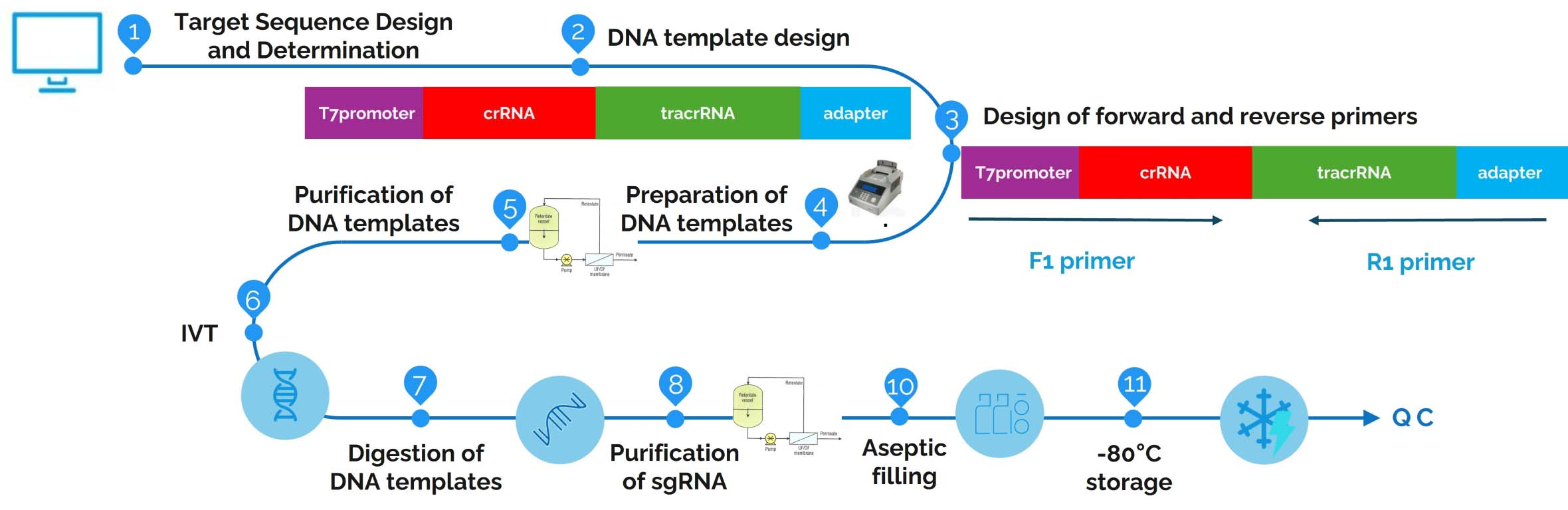
sgRNA complexes with Cas enzymes to form the ribonucleoprotein (RNP) complex which catalyzes CRISPR-mediated gene editing. uBriGene also has off-the-shelf GMP-grade Cas proteins and mRNA encoding Cas9, Cas12a, Cas13a, and Cas14a. We can provide RNP formulation services with your gene specific sgRNA. Request RNP Formulation.
The GMP-grade sgRNA IVT will be tested extensively for identity, purity, and safety using qualified and compendial methods to ensure its quality and safety for clinical use.
| Test Item | Method |
|---|---|
| Appearance | Visual method |
| RNA Concentration | UV absorbance |
| Purity | HPLC, A260/280 |
| Molecular Weight | Mass spectrometry |
| Identifying Sequence | Sanger sequencing |
| Endotoxin Detection | BDBU GEL-CLOT Method |
| Sterility | Culture method |
| Protein Residuals | Qubit / MicroBCA |
| pH | pH meter |
| DNA Residuals | qPCR |
| dsRNA | ELISA |
*Outsourced testing
Request a Quote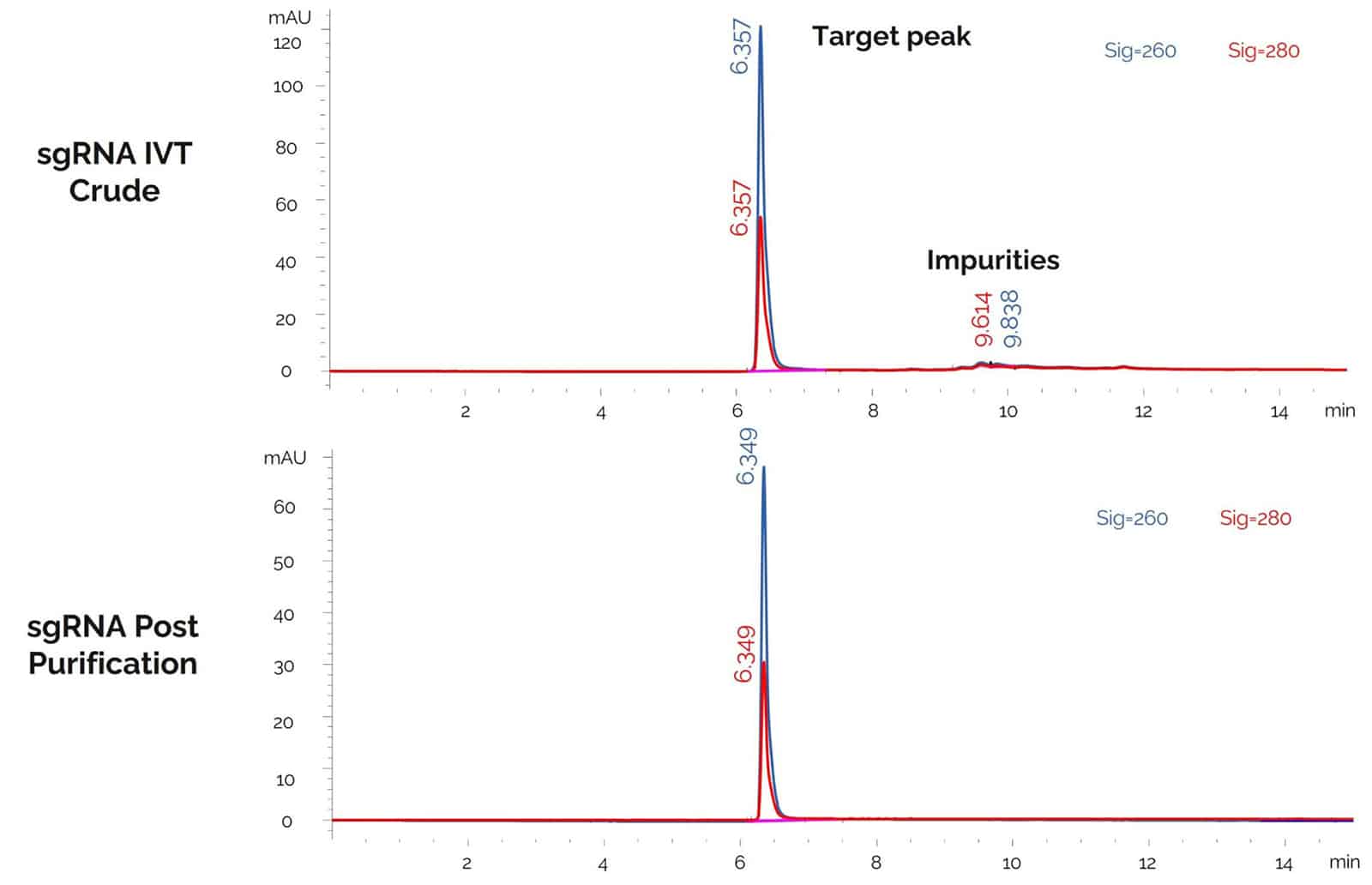
Fig. 1. Purity Analysis of sgRNA by HPLC.
Rhoncus duis elementum suspendisse odio amet arcu tellus. Sapien felis vestibulum euismod eget orci scelerisque id. Non ut sagittis leo et. Et pretium nisl ultrices dapibus sit euismod volutpat elementum.
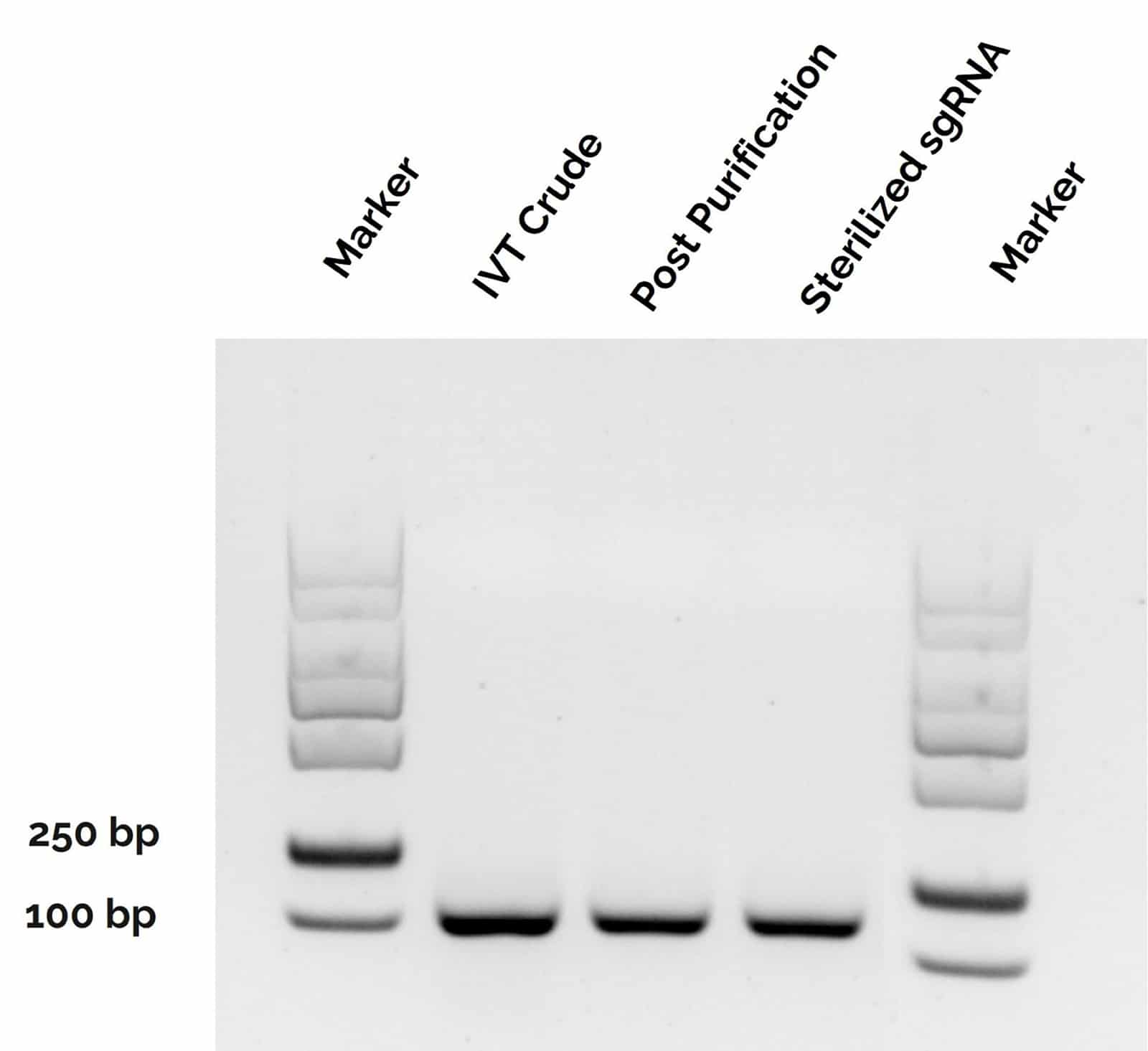
Fig. 2. The Purity of sgRNA by agarose gel electrophoresis.
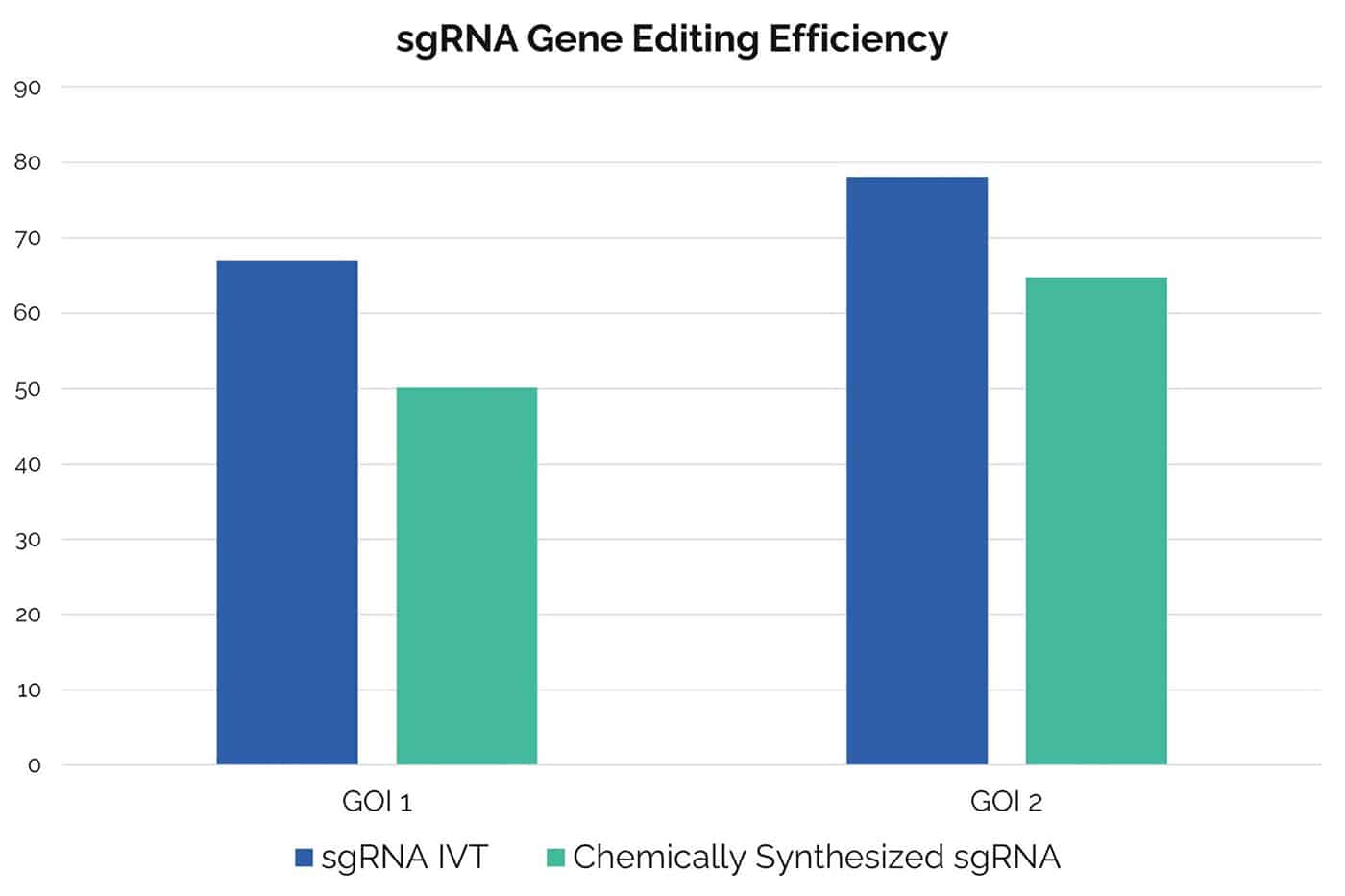
Fig. 3. Gene editing efficiency comparison of sgRNA IVT and chemically synthesized in iPSC cells. sgRNA and Cas9 RNPs targeting GOI 1 and GOI2 were transfected into cells. Gene knockout efficiency was determined by sequencing.
Discover our GMP iPSC production platform, powered by our efficient RNA-LNP reprogramming cocktail.
Learn about our CAR-T CDMO manufacturing and release testing services.
Explore RNA drug development fundamentals and the vital role of IVT in manufacturing.
Learn how to accelerate the development of iPSC-derived cell therapies.
sgRNA is the guide RNA component that directs a CRISPR-associated Cas enzyme to a specific target sequence. When sgRNA combines with a Cas protein, it forms a CRISPR ribonucleoprotein (RNP) complex that can be delivered into cells for transient gene editing without delivering DNA encoding the editing machinery. Editing performance depends on the guide sequence, Cas enzyme, target site, cell type, and delivery method.
uBriGene's IVT sgRNA can be supplied in nuclease-free water at 100 µM or at a customer-specified concentration according to downstream application requirements.
uBriGene offers both research-grade and GMP-grade sgRNA IVT manufacturing, supporting applications from early-stage research and development through programs requiring GMP materials.
No. The PAM is generally not part of the sgRNA sequence. It is a DNA sequence adjacent to the target site that is recognized by the Cas enzyme. The required PAM depends on the Cas system and should be considered when selecting the target sequence.
uBriGene has successfully manufactured more than 5 GMP sgRNA IVT batches and supports scalable sgRNA production, including gram-scale quantities, downstream purification, and comprehensive quality testing. Manufacturing and specifications can be adapted to the requirements of the gene-editing development program.
uBriGene incorporates a proprietary 3′-end aptamer into its sgRNA IVT platform to support sgRNA stability and gene-editing performance. Reported comparative results have shown improved editing efficiency under tested conditions, although performance can vary with the guide sequence, target, Cas system, cell type, and delivery method.
uBriGene's sgRNA IVT platform was developed to address challenges associated with sgRNA stability, transcription, and purification. The platform incorporates a proprietary 3′-end aptamer and optimized upstream and downstream processes, including chromatographic purification, to produce high-purity sgRNA at scalable quantities.
The estimated turnaround time for GMP sgRNA IVT production is approximately two weeks, depending on the specific sequence, manufacturing requirements, QC testing, and production scope.
Yes. IVT sgRNA can be used in CRISPR workflows for both indel-based gene knockout and homology-directed repair (HDR). HDR additionally requires an appropriate donor DNA template. Editing efficiency depends on the sgRNA sequence, target locus, Cas system, cell type, donor design, and delivery conditions.
Yes. In addition to GMP sgRNA IVT, uBriGene offers GMP Cas proteins and Cas mRNA to support CRISPR gene-editing workflows. These components can be used individually or combined with sgRNA depending on the editing strategy, delivery method, and cell type. Product specifications and availability can be defined according to the requirements of the development program.
Yes. uBriGene provides DNA manufacturing options that can support HDR workflows, including circular plasmid DNA, linear DNA, and linear closed-end DNA. The appropriate donor format and design depend on the target, editing strategy, cell type, and intended application.
uBriGene supports GMP sgRNA IVT manufacturing through established GMP quality systems, qualified manufacturing processes, analytical testing, and product documentation. Manufacturing and QC documentation can support applicable regulatory submissions, with requirements defined according to the product, development stage, and target market.
GMP sgRNA can be tested for appearance, RNA concentration, purity, molecular weight, sequence identity, endotoxin, sterility, residual proteins, residual DNA, dsRNA, and pH, using qualified or compendial methods as applicable. Final specifications are established according to the product, manufacturing process, and intended application.
uBriGene IVT sgRNA provides a scalable manufacturing route for larger quantities of guide RNA, while chemically synthesized guide RNA is commonly used for smaller-scale applications. Comparative studies have reported higher gene-editing efficiency for uBriGene's IVT sgRNA under the tested conditions, although performance can vary depending on the guide sequence, target gene, Cas enzyme, cell type, delivery method, and editing conditions.
Yes. uBriGene provides custom sgRNA IVT based on gene-specific sequences and can tailor concentration and product specifications according to downstream gene-editing requirements.
sgRNA IVT yield and quality can be affected by template design, target sequence, transcription conditions, RNA polymerase, nucleotide concentrations, reaction time and temperature, purification, and RNA stability. Process optimization and appropriate analytical testing are important for achieving consistent yield, purity, and functional performance.
End-to-end CDMO services with streamlined timelines and cost-effective processes.
Request Now