uVivo™ LVV is a targeted in vivo CAR-T platform that enables precise CAR delivery to T cells and rapid CAR-T generation in vivo. Single-dose administration supports low cost, off-the-shelf cancer therapies.
The uVivo™ LVV platform enables specific and rapid in vivo generation of chimeric antigen receptor (CAR)-T cells. Precise T-cell delivery is achieved through dual engineering: detargeted uVivo-CocalG and CD7 nanobody–mediated retargeting.

In vivo CAR-T generation (no ex vivo processing required
Detargeted uVivo-CocalG eliminates native broad tropism
T-cell targeting enabled by a CD7 nanobody with an optimized membrane anchoring sequence
High specificity with minimal off-target transduction
Validated efficacy in vivo
High productivity driven by optimized Ubri-CocalG and CD7 T-cell binder
Preclinical studies demonstrate highly specific T-cell targeting, with minimal to no transduction in non-target tissues
uVivo™ LVV is powered by detargeted Ubri-CocalG and CD7 nanobody–mediated T-cell targeting

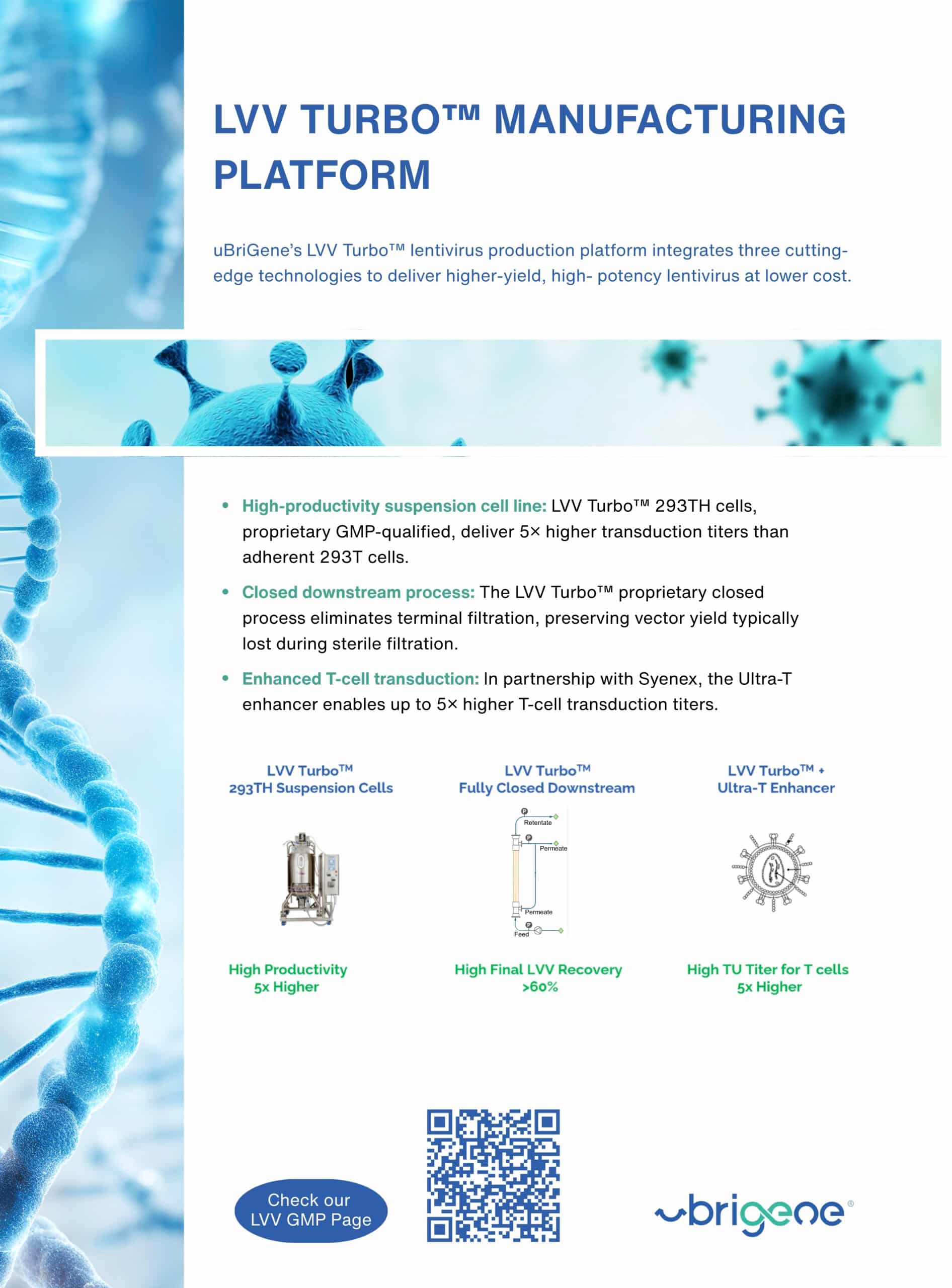
LVV Turbo™ 293TH suspension cells, 5x higher productivity
Fully closed downstream, eliminating the final sterile filtration, up to 70% recovery
The uVivo™ LVV platform is an in vivo CAR-T technology that enables precise delivery of CAR payloads to T cells, allowing rapid generation of CAR-T cells in vivo.
uVivo™ LVV particles are third-generation, self-inactivating, replication-deficient lentiviral vectors pseudotyped with a detargeted fusogen (uVivo-CocalG) and equipped with a CD7 T-cell binder for targeted delivery.
When combined with the high-yield, scalable LVV Turbo™ manufacturing platform, the off-the-shelf uVivo™ LVV platform has the potential to significantly improve the accessibility and affordability of CAR-T therapies.
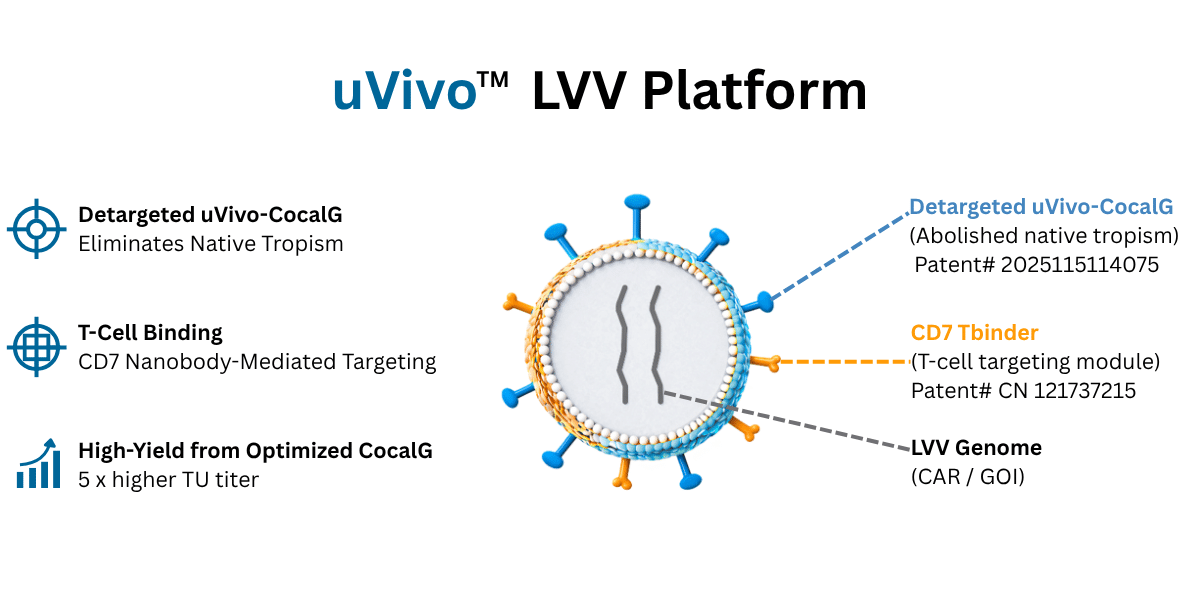
Fig. 1. uVivo™ LVV platform schematic illustrating targeted in vivo CAR-T delivery.
The uVivo™ platform uses a multi-step engineering strategy to achieve precise T-cell tropism. A sequence-optimized, detargeted Ubri-CocalG eliminates native receptor interactions while retaining fusion activity, and a CD7 nanobody–based binder enables targeted T-cell delivery, with transmembrane optimization increasing LVV activity by up to 10-fold.
This detargeting and retargeting approach enables selective in vivo T-cell transduction while minimizing off-target delivery to other tissues.
Engineered CocalG enables detargeted and retargeted LVV delivery, making it more suitable than VSV-G for targeted in vivo CAR-T applications.
Using the uVivo™ LVV platform, transduction titers for CAR payloads (measured by flow cytometry in PBMCs) can reach 3E9–2E10 TU from a 10 L batch, enabling the production of thousands of in vivo CAR-T doses.
This high productivity is driven by several key innovations:
Sequence-optimized Ubri-CocalG delivers ~3× higher productivity compared to the wild-type sequence
Optimized Ubri-CD7 T-cell binder (with engineered transmembrane domain) achieves up to a 10-fold increase in transduction efficiency
GOI sequence optimization further enhances TU titers by up to 5×
Integration with the LVV Turbo™ manufacturing platform, featuring a high-yield suspension cell line and a closed downstream process for scalable production.
The data below illustrates the detargeting (uVivo-CocalG), retargeting via CD7 T-cell binder optimization, and the transduction titer of our uVivo™ LVV platform.
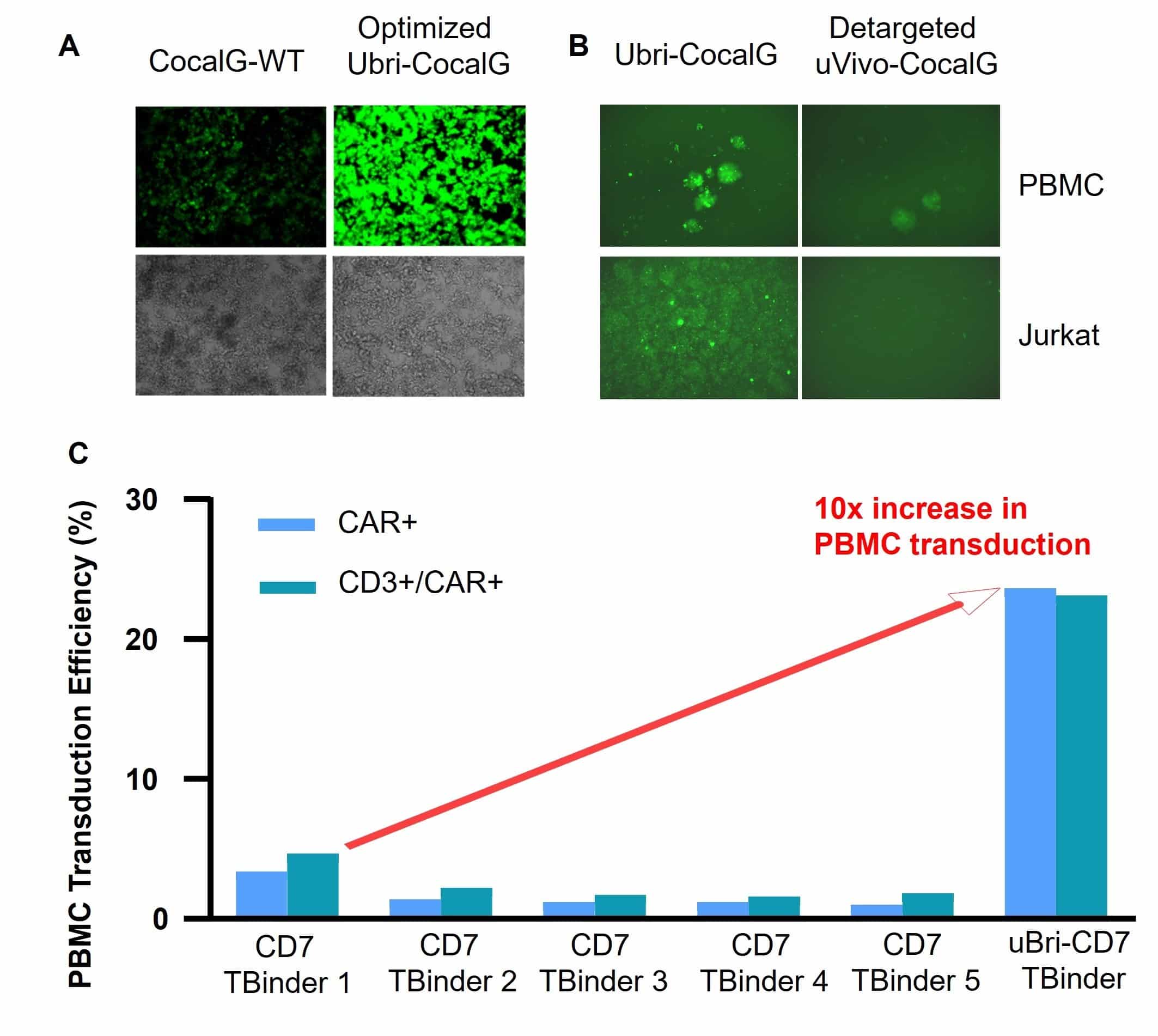
Fig. 2. uVivo-CocalG engineering for high yield and T-cell targeting.
A. Ubri-CocalG increases productivity. Sequence-optimized Ubri-CocalG shows ~3× higher gene expression than the wild type in 293T cells (24 h post-transduction).
B. Detargeted uVivo-CocalG eliminates native tropism. GFP LVVs pseudotyped with Ubri-CocalG or uVivo-CocalG were used to transduce PBMCs or Jurkat cells; images were captured 24 h post-transduction.
C. Optimized CD7 T-cell binder enhances transduction. Transmembrane variants were screened in PBMCs using uVivo-CocalG–pseudotyped LVVs. The optimized binder achieved ~10× higher transduction efficiency; CAR⁺ (blue) and CD3⁺CAR⁺ (green) cells were measured by flow cytometry.
In preclinical studies, humanized mouse models of multiple myeloma treated with a single intravenous dose of anti-BCMA uVivo™ LVV particles showed complete tumor clearance.
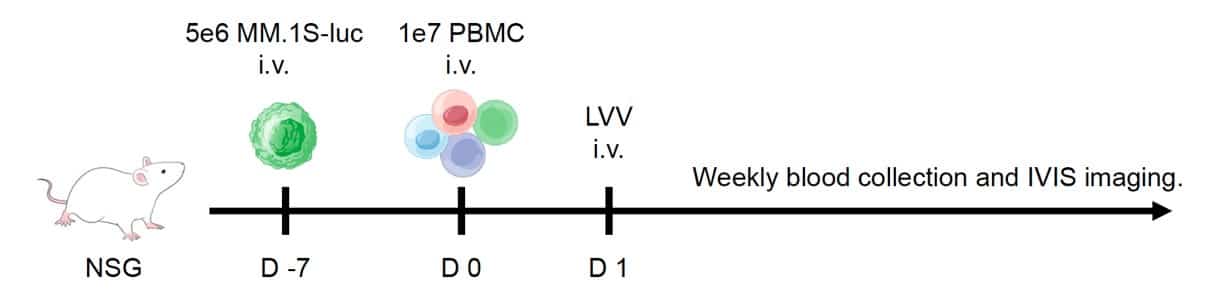
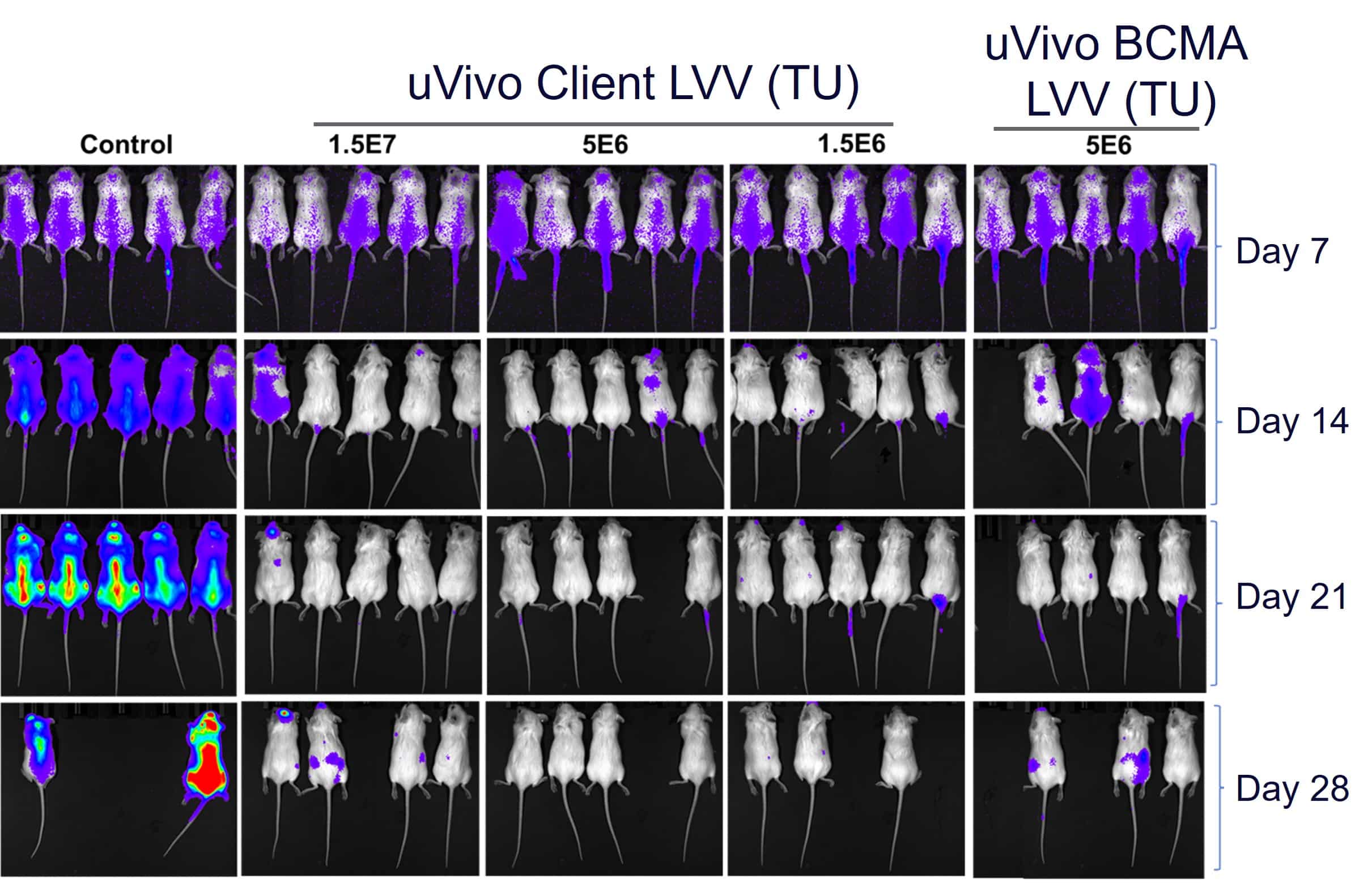
Fig. 3. uVivo CAR-T Shows Efficacy in a Multiple Myeloma Mice Model.
A. Diagram of the mouse treatment schedule. NSG mice were injected intravenously (i.v.) with luciferase-labeled myeloma cells and treated with lentiviral vectors. Tumor burden was monitored by in vivo bioluminescence imaging.
B. In vivo CAR LVV particles were produced using the uVivo™ LVV platform and the LVV Turbo™ manufacturing platform. Three doses of uVivo Client LVV and one dose of uVivo anti-BCMA LVV were evaluated. Weekly bioluminescence imaging was performed to track tumor burden.
CAR payloads selectively target T cells (not B cells), achieving ~45% T-cell transduction in an in vitro PBMC study (Table 1).
uVivo LVV particles were not detected in non-target tissues, including the spleen, liver, brain, muscle, kidneys, heart, lung, small intestine, stomach, or bone, in a multiple myeloma biodistribution study (Table 2).
| Cell Types | Non-Treated PBMCs | uVivo LVV Treated PBMCs |
|---|---|---|
| CD3+ | 67.18% | 67.2% |
| CD19+ | 10.67% | 13.16% |
| CAR+, CD3+ | 0.34% | 44.98% |
| CAR+, CD19+ | 0.89% | 1.05% |
Table 1. uVivo™ LVV enables precise CAR delivery to T cells. PBMCs were treated with or without uVivo LVV anti-BCMC vectors. Flow cytometry was used to measure the corresponding markers.
| Mouse# | Organs | VCN (Copies/Cell) |
|---|---|---|
| BCMA085E6 | Lung | 0.0004 |
| Muscle | 0.0836 | |
| Brain | 0.0038 | |
| Small intestine | 0.0586 | |
| Spleen | 0.0019 | |
| Liver | 0.0011 | |
| Kidney | 0.0020 | |
| Heart | 0.0050 | |
| Stomach | 0.0144 | |
| Bone | 0.1424 | |
| Positive Control | 7.865 | |
| Standard Recovery Rate: 95.1% | ||
Table 2. uVivo LVV does not target other organs in the animal study. Tissue genomic DNA was collected from mice treated with 5E6 anti-BCMA uVivo LVV. Vector copy number (VCN) per cell was determined by qPCR.
Discover how our LVV Turbo platform can produce thousands of CAR-T doses.
Discover Lentivirus (LVV Turbo™) production processes and testing.
Discover CAR-T production process & regulatory guidelines.
Discover our mRNA-LNP manufacturing capabilities and testing platform
In vivo CAR-T is an investigational approach that genetically modifies T cells directly inside the body rather than collecting and engineering T cells ex vivo. The resulting CAR-T cells can recognize and target cells expressing the selected antigen. Delivery systems under investigation include targeted lentiviral vectors and lipid nanoparticles (LNPs). uVivo™ uses a targeted lentiviral-vector strategy based on detargeted CocalG and CD7-mediated T-cell targeting.
Targeted lentiviral vectors are designed to deliver CAR-encoding genetic material preferentially to T cells after systemic administration. uVivo™ combines a detargeted CocalG fusogen to reduce native broad tropism with a CD7 nanobody-based binder to direct the vector toward CD7-expressing T cells. This detargeting-and-retargeting strategy is designed to improve the selectivity of in vivo CAR delivery.
uVivo™ LVV has demonstrated preferential CAR delivery to T cells in an in-vitro PBMC study.
CAR-positive CD3+ cells increased from 0.34% in non-treated PBMCs to 44.98% following uVivo™ LVV treatment, while CAR-positive CD19+ cells remained low, changing from 0.89% to 1.05%. In a humanized multiple-myeloma mouse model, a single intravenous dose of anti-BCMA uVivo™ LVV resulted in complete tumor clearance in the reported study. A separate biodistribution study found no detectable uVivo™ LVV particles in evaluated non-target tissues, including the spleen, liver, brain, muscle, kidneys, heart, lung, small intestine, stomach, and bone.
These findings are preclinical and do not establish clinical efficacy or safety.
uVivo™ uses engineered CocalG because the platform is designed to remove native broad tropism before retargeting the lentiviral vector to T cells.
VSV-G is widely used for ex vivo LVV applications because of its broad tropism, which is mediated in part through the LDL receptor, but it can be affected by neutralizing antibodies in human serum.
CocalG-pseudotyped lentiviral vectors have demonstrated resistance to human-serum-mediated inactivation in reported studies, supporting its investigation for in vivo delivery.
uVivo™ combines detargeted CocalG with a CD7 nanobody-based binder to enable targeted T-cell delivery.
uVivo™ LVV is integrated with uBriGene’s scalable LVV Turbo™ manufacturing platform, supporting GMP lentiviral vector production from development-scale batches through larger manufacturing volumes. In a 10 L batch, the platform has demonstrated CAR-payload transduction titers of 3E9–2E10 TU.
uBriGene supports process development, analytical testing, GMP manufacturing, and CMC activities for in vivo CAR-T programs. uVivo™ is presented as an IND-ready technology, with IND-enabling requirements established according to the specific therapeutic program.
In vivo CAR-T is being investigated as a way to reduce several steps required for ex vivo cell manufacturing, including leukapheresis, T-cell activation, genetic modification, and expansion outside the body. Potential advantages include simplified manufacturing, shorter manufacturing workflows, scalability, and the possibility of an off-the-shelf treatment approach.
Depending on the therapeutic design, in vivo CAR-T may also reduce the need for some ex vivo manufacturing steps or lymphodepleting conditioning. These potential benefits, including possible effects on cost and patient accessibility, remain subject to clinical development and validation.
Autologous CAR-T uses a patient's own T cells, which are collected by leukapheresis and genetically modified and expanded ex vivo. This personalized approach can involve complex and time-consuming manufacturing.
Allogeneic CAR-T uses donor-derived T cells and is being developed as an off-the-shelf approach, but immune rejection and graft-versus-host disease (GVHD) are important considerations.
In vivo CAR-T aims to genetically modify T cells directly inside the patient using a delivery system such as a targeted lentiviral vector or LNP, eliminating ex vivo T-cell manufacturing.
Each approach has different manufacturing, immune-response, safety, conditioning, and scalability considerations.
Key challenges include achieving selective T-cell delivery while minimizing off-target transduction, generating sufficient functional vector, controlling CAR expression, and establishing safety and efficacy through preclinical and clinical development. For targeted LVV approaches, these challenges also include controlling native viral tropism and achieving efficient delivery to the intended T-cell population.
uVivo™ addresses the targeting challenge through detargeted CocalG and CD7-mediated T-cell targeting, with preclinical studies evaluating transduction specificity and biodistribution.
uVivo™ combines two engineering strategies for targeted T-cell delivery. A sequence-optimized, detargeted CocalG fusogen reduces native receptor interactions and broad tropism, while a CD7 nanobody-based binder directs the lentiviral vector toward CD7-expressing T cells. This detargeting-and-retargeting design is central to uVivo™'s approach to more selective in vivo CAR delivery.
uVivo™ uses a targeted lentiviral vector to deliver CAR genetic material to T cells, whereas LNP systems generally provide transient RNA delivery. The two approaches differ in vector biology, duration of expression, targeting strategy, repeat-dosing considerations and manufacturing requirements.
uVivo™ LVV is currently presented by uBriGene as an IND-ready in vivo CAR-T technology supported by preclinical studies. Reported studies include targeted T-cell transduction, tissue biodistribution, and anti-BCMA activity in a humanized multiple-myeloma mouse model. Clinical use depends on the specific therapeutic program, regulatory authorization, and successful clinical development.
Preclinical studies demonstrate highly specific T-cell targeting, with minimal to no transduction in non-target tissues
uVivo™ LVV is powered by detargeted Ubri-CocalG and CD7 nanobody–mediated T-cell targeting.
Research and GMP lentivirus productions