Ready-to-use, non-integrating reprogramming products featuring RNA-LNP cocktails for efficient generation of induced pluripotent stem cell (iPSC).


The iPSC Reprogramming Kit is a simple lipid nanoparticle (LNP)-based system containing RNAs encoding five key reprogramming factors. It enables highly efficient fibroblast reprogramming to iPSC and PBMC reprogramming to iPSC, reprogramming of other somatic cells into iPSCs with lower toxicity than conventional RNA-based reprogramming methods.

Reprogramming with RNA, no risk of gene integration
Ready-to-use LNP mix, can be directly added to cells, eliminating the need for transfection reagents or viral manipulation
Low cytotoxicity, high iPSC reprogramming efficiency
System flexibility: suitable for feeder or feeder-free conditions
Our RNA-LNP iPSC reprogramming kit delivers high-efficiency results in a simple, ready-to-use format — just add directly to cells.
| Catalog Number | Description | Product Size | Product Grade | Price (Research Grade) |
|---|---|---|---|---|
| iPSC-RPM-RNA-LNP-V2-S | An efficient RNA-LNP iPSC reprogramming kit for PBMCs, fibroblasts, difficult-to-reprogram, and disease-derived cells, can be directly added to cells | 1x80uL RNA-LNP cocktail, 1x30uL enhancer B (2 x iPSC reprogramming) | ☑Research ☐GMP | $995 |
| iPSC-RPM-RNA-LNP-V2 | 3x80uL RNA-LNP cocktail, 1 x enhancer B (80 uL) (6 x iPSC reprogramming reactions) | ☑Research ☑GMP | $2,680 | |
| LNP-ENHANCER-B | Enhancer B | 80uL / vial | ☑Research ☑GMP | $750 |
| PBMC-COMP-MEDIA-01 | Complete PBMC expansion medium containing all necessary growth factors for pre-reprogramming cell expansion | 50mL / vial | ☑Research ☐GMP | $450 |
Note: Research use only. Licensing is required for commercial use. View the product's LULL.
PBMC Kit (Cat# iPSC-RPM-RNA-LNP-V2): This kit is designed for efficient fibroblast reprogramming to iPSC, PBMC reprogramming to iPSC, and hard-to-reprogram cells.
| Reprogramming Cell Types | PBMC & difficult-to-reprogram cell reprogramming kit (cat# iPSC-RPM-RNA-LNP-V2) |
|---|---|
| Fibroblasts from young donors | √ |
| Fibroblasts from aged donors | √ |
| Disease-derived fibroblasts | √ |
| PBMCs | √ |
| Cells from aged donors | √ |
| Patient-derived cells | √ |
GMP-grade iPSC reprogramming RNA-LNP cocktail
Sit aliquam elit vitae bibendum lectus blandit dictum. Nisi porta elementum sed diam eleifend pellentesque. Quis aenean quam.
Request a Consultation

Extensive iPSC generation and cell bank manufacturing experience with access to essential raw materials, including RNA-LNP iPSC reprogramming kit and CRISPR gene editing tools.
Extensive plasmid production experience
100+ GMP plasmid projects annually
Somatic cells (fibroblasts, PBMCs, or other cell types) are seeded onto feeder or feeder-free plates. RNA-LNP cocktails are directly added to the cell culture at a frequency specific to each cell type. After treatment with the iPSC Reprogramming Kit, cells are maintained in reprogramming medium throughout the induction phase until iPSC colonies emerge. Typically, by Day 15, the colonies are sufficiently large for selection and expansion.
Fully characterized iPSC bank and iPSC cell lines, generated using uBriGene's RNA-LNP reprogramming kit, are available to accelerate your cell therapy research and clinical applications.
By day 4, cell morphology changed significantly. Deformable cells increased by day 6, and aggregated cells appeared by day 8 of reprogramming. iPSC-like cells emerged on day 11, and typical iPSC colonies formed by day 13.

Fig. 2. Cell morphologies following treatment with uBriGene's RNA-LNP iPSC Reprogramming Kit. (A) Fibroblast reprogramming to iPSC; (B) PBMC reprogramming to iPSC.
Human skin fibroblasts were reprogrammed into iPSCs using uBriGene’s RNA-LNP iPSC Reprogramming Kit, and the colonies were identified with AP staining on day 18. The results showed that iPSC colonies were positive for AP staining, with reprogramming efficiency reaching as high as 10%.
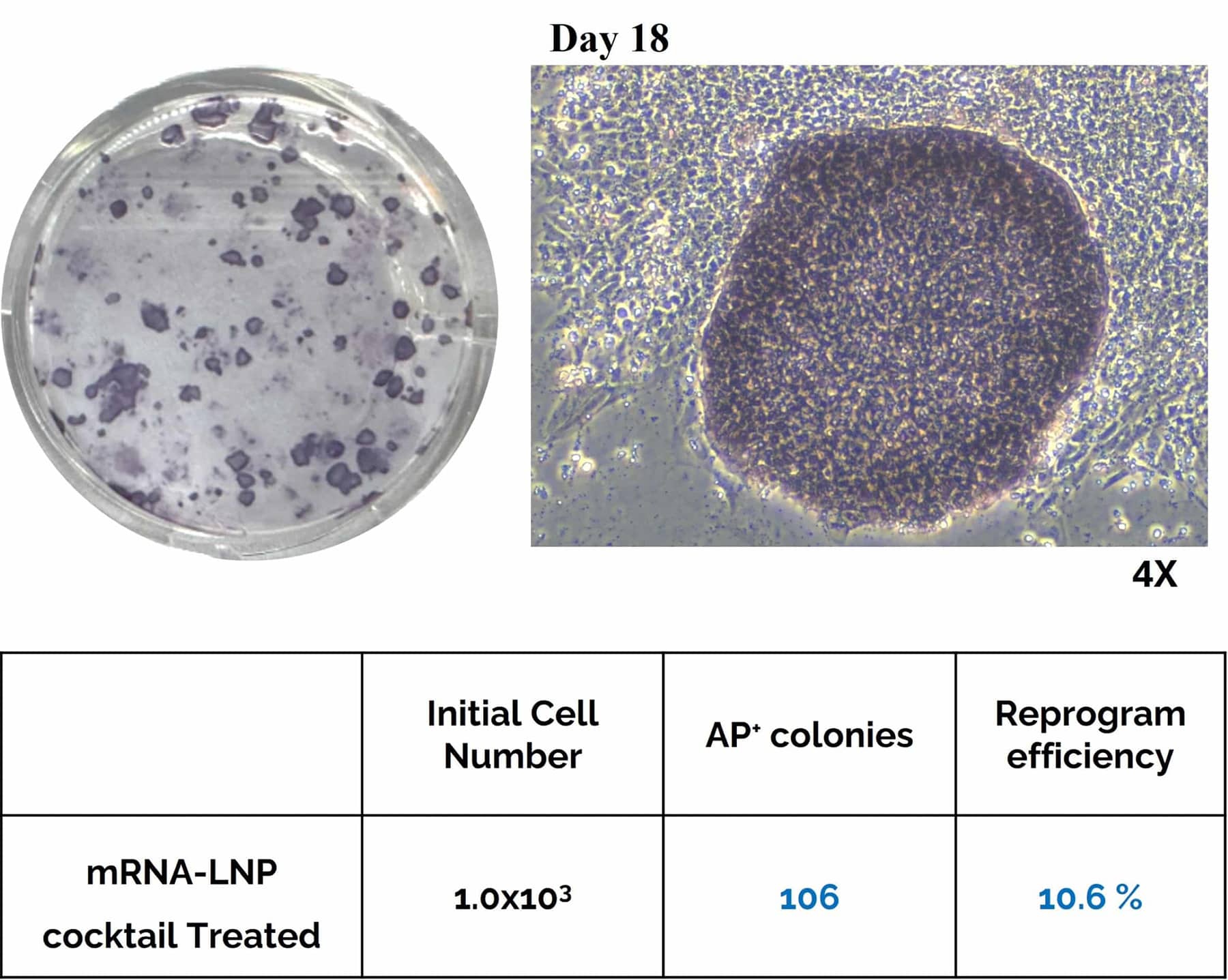
Fig. 3. iPSC identification using Alkaline phosphatase staining after the iPSC reprogramming process with RNA-LNP cocktail.
iPSCs generated using our proprietary RNA-LNP reprogramming kit exhibit robust expression of stemness and pluripotency. Following reprogramming, the cells are rigorously characterized to confirm genomic stability and absence of residual RNA.
Fully established research-grade iPSC cell lines and GMP iPSC bank are available to support your regenerative and allogeneic therapy programs.
| Test Item | Assay |
|---|---|
| Sterility | Immersion Sterility tests (B/F) |
| Mycoplasma Testing | Culture and cell indication assay |
| Endotoxin | Kinetic chromogenic LAL |
| Cell Viability | Trypan Blue |
| Pluripotency Characteristics | Flow cytometry |
| Embryoid body formation | |
| Genetic stability | STR genotyping |
| Karyotype analysis | |
| Adventitious Viruses | Transmission electron microscopy (TEM) |
| In vitro assay for adventitious virus contaminants | |
| Fluorescent Product Enhanced Reverse Transcriptase (FPERT) method |
These simplified reprogramming protocols for fibroblast reprogramming to iPSC and PBMC reprogramming to iPSC outline the key steps for generating high-quality iPSCs using our reprogramming RNA-LNP cocktails.
iPSC Reprogramming Protocol Using RNA-LNP Kit
Step 1: Culture fibroblasts, PBMCs, or other cell types with cell-type specific culture medium.
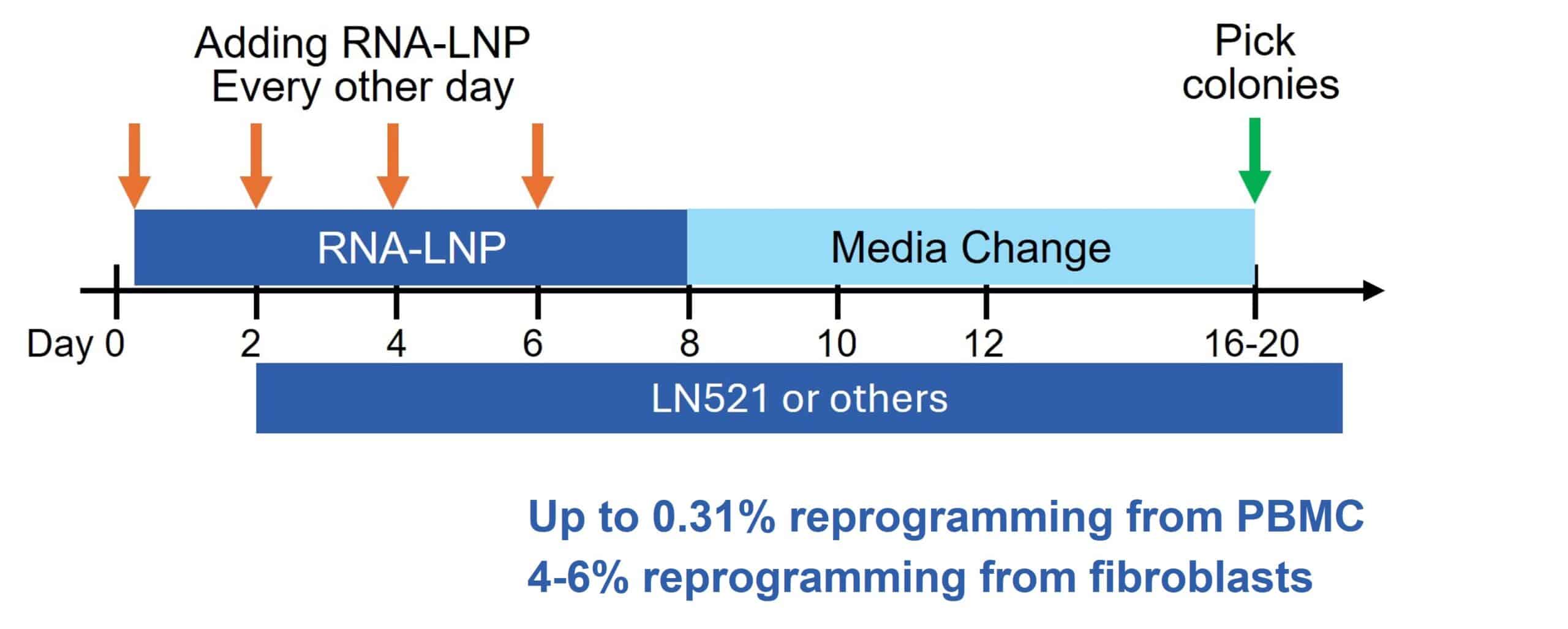
Step 2: Treat cells with the RNA-LNP cocktail every other day for a total of four treatments. Add Serum-Free Enhancer B to the media. BioLaminin 521 is recommended for plate coating.
Step 3: Change the media daily using ReproTeSR and monitor for iPSC colony formation.
Step 4: Pick and expand iPSC colonies between Days 16–20. Confirm iPSC formation by AP staining and validate pluripotency with markers such as SSEA4, TRA-1-81, SOX2, and NANOG.
Learn how to accelerate the development of iPSC-derived cell therapies.
Unlock safer regenerative therapies with Genome-Safe iPSC RPM for clinical success.
Redefining RNA Therapeutics: GMP RNA-LNP Manufacturing You Can Trust
Explore RNA drug development fundamentals and the vital role of IVT in manufacturing.
uBriGene’s RNA-LNP iPSC Reprogramming Kit is a ready-to-use lipid nanoparticle formulation for reprogramming somatic cells into induced pluripotent stem cells (iPSCs). The cocktail delivers RNAs encoding five reprogramming factors and is designed for fibroblast, PBMC, and other somatic-cell reprogramming applications.
The RNA-LNP cocktail delivers reprogramming-factor RNAs into somatic cells, triggering their conversion into induced pluripotent stem cells (iPSCs). Because the reprogramming factors are delivered as RNA, this non-integrating approach does not require DNA delivery or an integrating viral vector, reducing the risk of permanent genomic changes.
The workflow involves repeated RNA-LNP treatments followed by culture, colony formation, selection and expansion, and characterization of the resulting iPSC lines.
RNA-LNP iPSC reprogramming offers several advantages over Sendai-virus reprogramming. The RNA-LNP cocktail avoids gene integration, provides high reprogramming efficiency with low cytotoxicity, and can be delivered directly to cells without transfection reagents or viral manipulation.
It also avoids the additional passaging required for Sendai-virus clearance. Sendai-virus reprogramming may require up to 10 iPSC passages for viral clearance, whereas RNA-LNP-mediated reprogramming does not require additional passaging for viral clearance. This difference can simplify the workflow and reduce time and cost. The comparison is supported by a published study of mRNA-Lipid Nanoparticle-Mediated Reprogramming and Standard Sendai Virus Reprogramming: Generation of iPSCs and iPSC-Derived Cardiomyocytes.
The RNA-LNP iPSC reprogramming process typically takes approximately 15–18 days to reach the selection and expansion stage. iPSC-like cells may appear around Day 11, with typical colonies forming around Day 13. The exact timeline can vary depending on the starting cell type and culture conditions.
Yes. iPSCs generated using uBriGene’s RNA-LNP reprogramming cocktail are characterized for pluripotency. The resulting cells express key pluripotency markers, including SSEA4, TRA-1-81, SOX2, and NANOG, and uBriGene’s iPSC characterization program can include differentiation-based assessment of pluripotency.
uBriGene’s RNA-LNP iPSC Reprogramming Kits are designed for fibroblast and PBMC reprogramming, including difficult-to-reprogram and disease-derived cells. The broader PBMC kit can also support other somatic-cell applications, depending on the starting cell type and experimental requirements.
uBriGene’s iPSC cell-bank characterization and release testing can include identity, stemness and pluripotency markers, cell viability, genetic stability, sterility, mycoplasma, adventitious-virus testing, and other cell-bank-specific quality attributes. Pluripotency can be assessed using flow cytometry for markers such as SSEA4, TRA-1-81, SOX2, and NANOG, together with differentiation-based assays as applicable to the cell-bank program.
Yes. RNA-LNP iPSC reprogramming is a non-integrating approach because the reprogramming factors are delivered as RNA rather than DNA or an integrating viral vector. The RNA is used to transiently express the reprogramming factors, reducing the risk of permanent genomic changes.
The current uBriGene workflow uses four RNA-LNP treatments administered every other day, followed by culture and monitoring for iPSC colony formation.
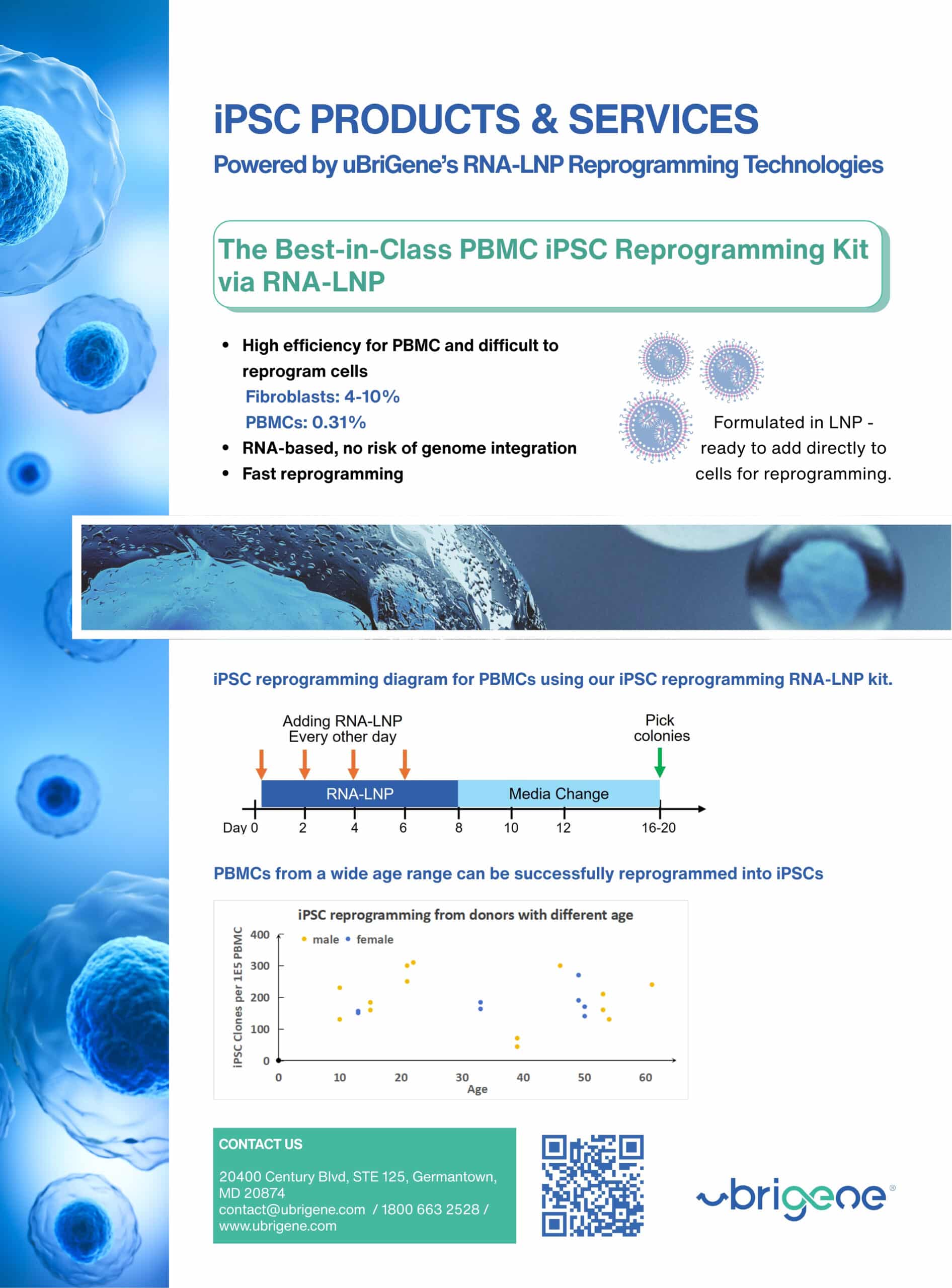
Reprogramming efficiency depends on the starting cell type and experimental conditions. uBriGene reports reprogramming efficiencies of 4–10% for fibroblasts and up to 0.31% for PBMCs. Fibroblast performance can vary with donor source, passage history, and cell quality, so program-specific testing may be appropriate.
uBriGene offers a fibroblast-specific kit (PSC-RPM-mRNA-LNP-FB) and a broader RNA-LNP kit (iPSC-RPM-RNA-LNP-V2) validated for PBMCs, fibroblasts, including aged-donor and disease-derived cells, and other difficult-to-reprogram cells. The appropriate kit depends on the starting cell type and reprogramming requirements.
The RNA-LNP iPSC reprogramming cocktail contains five reprogramming-factor RNAs: OCT4, SOX2, KLF4, c-MYC, and LIN28A. The combination is designed to support reprogramming of somatic cells toward an induced pluripotent stem cell (iPSC) state.
Extensive expertise with a track record of successfully releasing over 60 GMP batches of AAV.
GMP grade iPSC reprogramming mRNA & mRNA-LNP cocktail
iPSC Cell Banks for clinical use
Sit aliquam elit vitae bibendum lectus blandit dictum. Nisi porta elementum sed diam eleifend pellentesque. Quis aenean quam.
Request a Quote