Lentivirus purified through an optimized manufacturing process, highly potent with transduction units defined by flow cytometry.
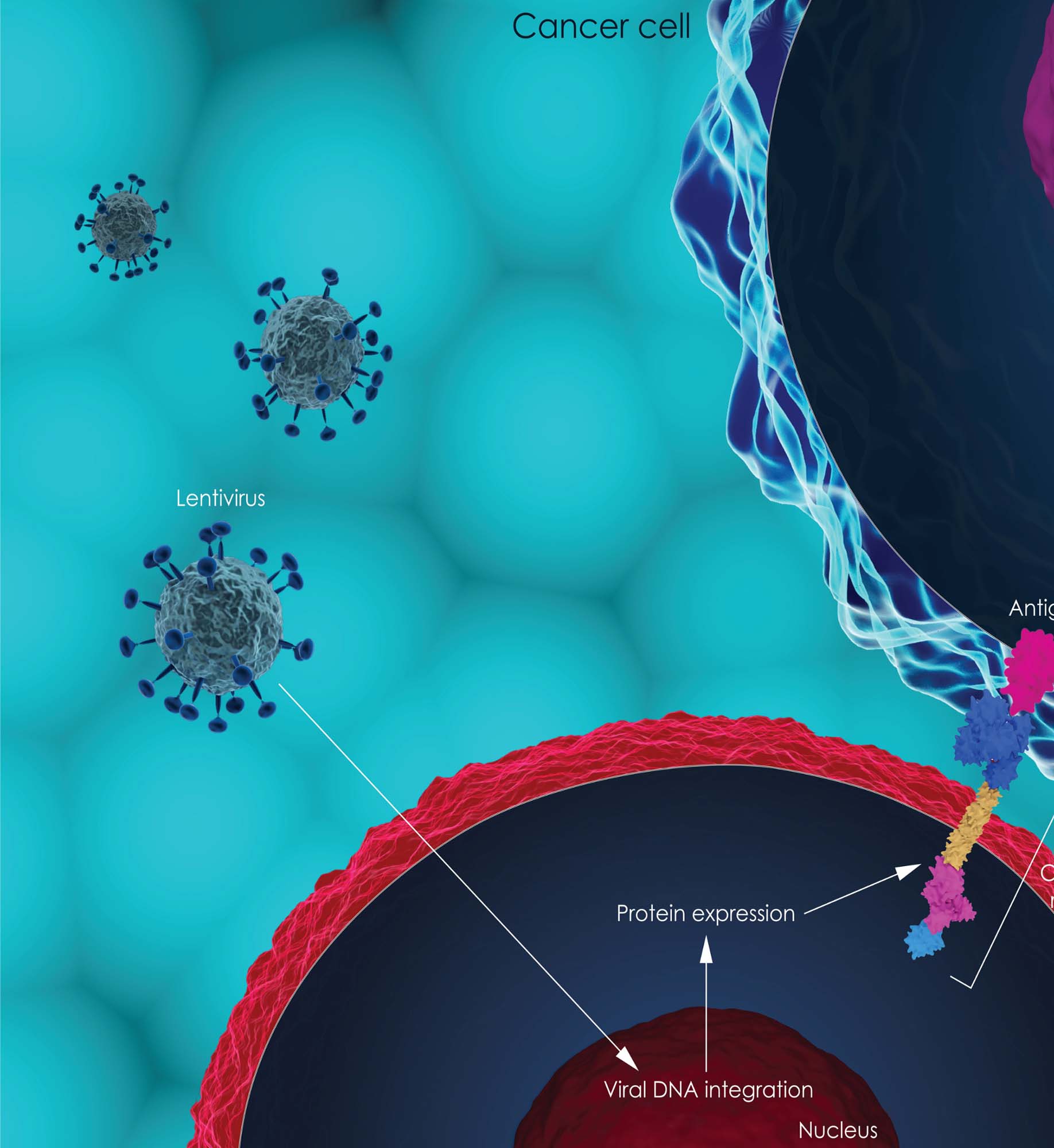
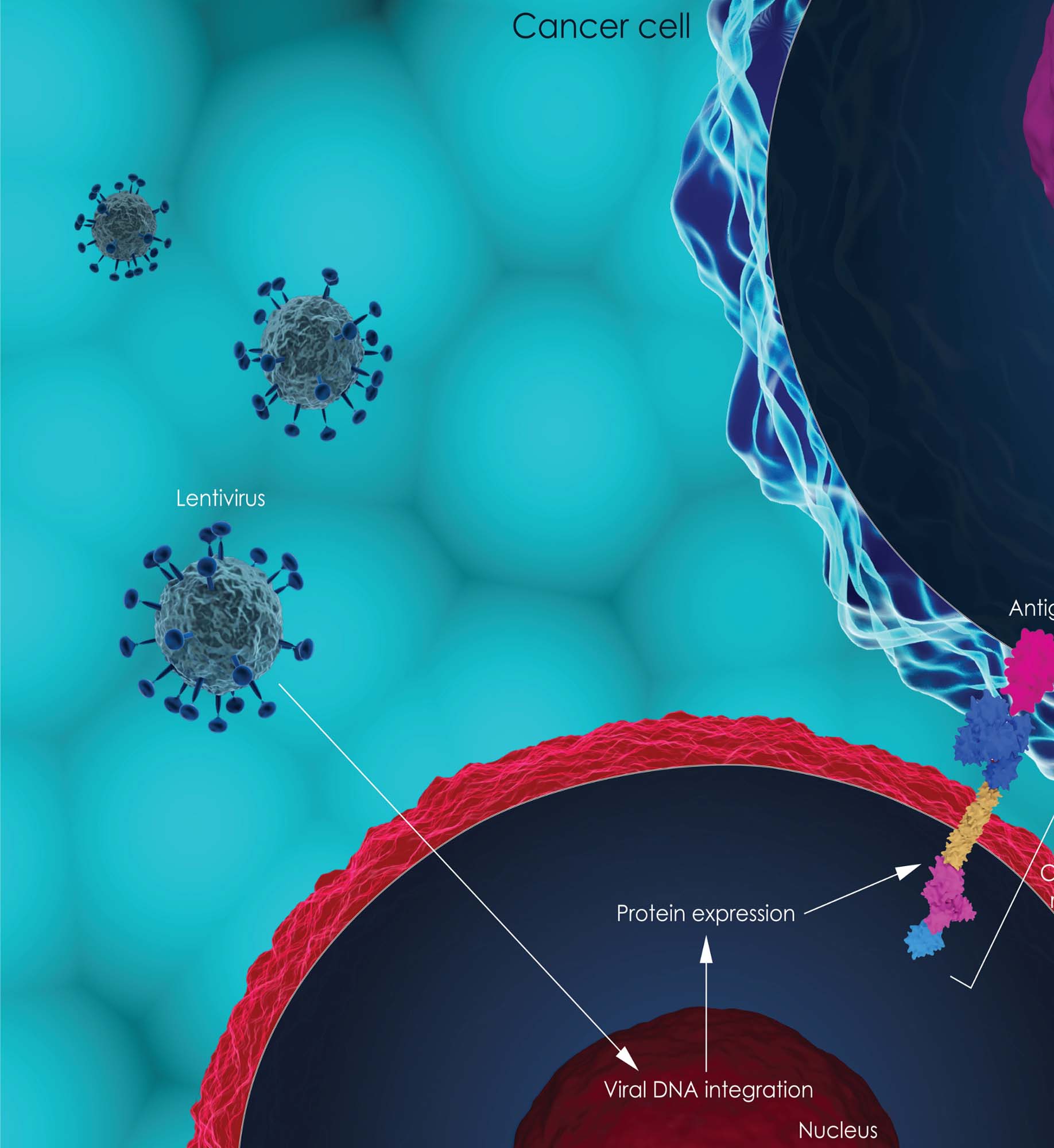
uBriGene’s lentiviral products are produced with extensive expertise in lentivirus production and are supported by a comprehensive suite of quality control testing.
Each batch includes actual transduction titers measured via flow cytometry to ensure high-quality performance.

Purified and high-quality lentivirus
Transduction titer determined using flow cytometry
Large scale and GMP lentivirus production capabilities
Custom lentivirus production available for your gene of interest
| Product Name | Catalog Number | Description | Volume | Price | ||
|---|---|---|---|---|---|---|
| GFP Lentivirus | LV-CMV-C-GFP-E7 | 1305LV-CMV-C-GFP-E7 | Lentivirus, expressing CMV-GFP, Neomycin resistance, 10^7 TU/mL | 200 uL | ||
| LV-CMV-C-GFP-E8 | 1305LV-CMV-C-GFP-E8 | Lentivirus, expressing CMV-GFP, Neomycin resistance, 10^8 TU/mL | 200 uL | |||
| LV-CMV-C-GFP-E9 | 1305LV-CMV-C-GFP-E9 | Lentivirus, expressing CMV-GFP, Neomycin resistance, 10^9 TU/mL | 100 uL | |||
| Luciferase-mWasabi Lentivirus | LV-CMV-Luciferase-mWasabi-E7 | 1305LV-CMV-Luciferase-mWasabi-E7 | Lentivirus, expressing CMV-Luciferase-mWasabi, blasticidin resistance, 10^7 TU/mL | 200 uL | Please Inquire | |
| LV-CMV-Luciferase-mWasabi-E8 | 1305LV-CMV-Luciferase-mWasabi-E8 | Lentivirus, expressing CMV-Luciferase-mWasabi, blasticidin resistance, 10^8 TU/mL | 200 uL | |||
| LV-CMV-Luciferase-mWasabi-E9 | 1305LV-CMV-Luciferase-mWasabi-E9 | Lentivirus, expressing CMV-Luciferase-mWasabi, blasticidin resistance, 10^9 TU/mL | 100 uL | |||
| Raji-Luc cells | Raji-LUC | Raji-LUC | Raja cells stably expressed with luciferase and mWasabi, blasticidin resistance, single cell colonies isolated using flow cytometry. | 12E6 cells/mL, 1mL | ||
Note: If different titers and requirements for the lentivirus are needed, uBriGene provides custom lentivirus production. Contact us.
Request a quoteInfectious titer measured using flow cytometry
Best for in vivo animal studies and in vitro cell culture


As an experienced lentivirus CDMO provider, uBriGene supports your lentivirus packaging discovery and preclinical needs with scalable and optimized production processes.
Extensive plasmid production experience
100+ GMP plasmid projects annually
uBriGene utilizes a third-generation, four-plasmid lentivirus packaging system—pGag/Pol, pRev, pVSV-G, and GOI—for enhanced safety.
Lentiviral packaging plasmids and the gene of interest (GOI) are transiently transfected into HEK293 cells or uBriGene’s proprietary suspension cells, 293TH, followed by lentivirus purification via ultracentrifugation or chromatography
Lentiviral particles, being enveloped viruses, tend to lose their infectivity easily. uBriGene has optimized its production process to ensure highly potent lentivirus. Infectious titers are measured using flow cytometry after cell transduction.

HEK293 cells were transduced with GFP lentivirus. Fluorescent images taken 48 hours post transduction.
Raji-Luciferase stable cells are developed by transducing Raji cells with luciferase-mWasabi lentivirus, followed by single-cell isolation using flow cytometry. These Raji-Luciferase cells are commonly used in CAR-T cell killing assays.
Unveil the current manufacturing approaches for LVV and its deployment in cell therapies.
Learn about CAR-T production process & regulatory guidelines.
Redefining RNA Therapeutics: GMP RNA-LNP Manufacturing You Can Trust
Learn how uBriGene can support your discovery and clinical programs.
The lentiviral particles from uBriGene are pseudotyped lentiviruses using VSV-G as the envelope protein, enabling broad cell tropism. They can transduce most cell types.
uBriGene's lentiviruses are third-generation, replication-deficient particles with a biosafety level of BSL-2.
Functional titer assays are performed via cell culture-based transduction assays and measured by flow cytometry. uBriGene’s transduction titers provide an accurate reflection of the actual infectious titer.
Multiplicity of infection (MOI) describes the ratio of infectious lentiviral particles to target cells. The optimal MOI varies by cell line and application; uBriGene recommends testing a range of MOIs from 5 to 100 using positive lentiviral control particles with a fluorescent marker, such as uBriGene's GFP control lentivirus.
Lentiviral vectors can efficiently transduce both dividing and non-dividing cells and support stable integration into the host genome for long-term gene expression. Their relatively large packaging capacity and broad tropism with commonly used VSV-G pseudotyping make them useful for a wide range of cell and gene therapy and research applications.
Lentiviruses are shipped on dry ice. For long-term storage, lentiviral particles should be aliquoted and stored at -80°C.
uBriGene provides both research-grade and GMP lentivirus production, as well as ready-to-use lentiviral products for applications including in vitro cell culture and in vivo animal studies.
Yes. uBriGene provides custom lentivirus production for different genes of interest and titer requirements, supporting both research and GMP applications. Custom production can be tailored to the required lentiviral construct, scale, and target application.
uBriGene offers ready-to-use lentiviral products with titers of 10⁷, 10⁸, and 10⁹ TU/mL, depending on the product. Custom lentivirus production is also available for different titer and production requirements.
uBriGene evaluates lentivirus products using comprehensive quality control testing, including functional transduction titer measured by flow cytometry. Its lentivirus manufacturing platform also supports quality testing and characterization appropriate to the product and intended application.
Ready-to-use Lentiviruses
Custom lentivirus productions
Research and GMP lentivirus productions