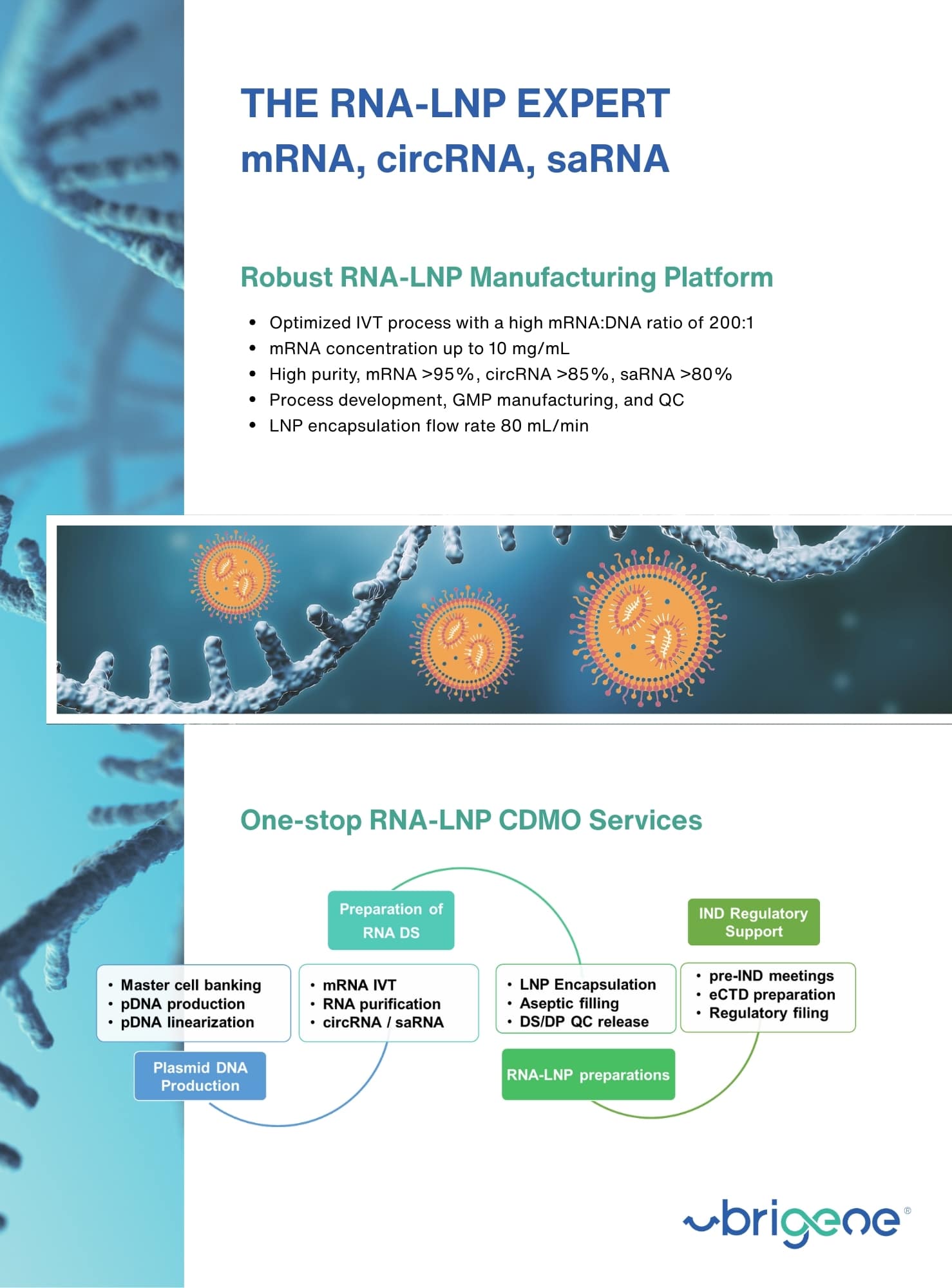
GMP-grade circRNA-LNP manufacturing services ensure high-purity, high-quality RNA-based therapies, accelerating the progression of therapeutic programs into clinics.

Our platform-based GMP circRNA-LNP manufacturing integrates technical innovations, such as optimized in vitro mRNA transcription, RNA circularization, and RNaseR processing, ensuring over 90% purity and potent therapeutic delivery.



With our GMP circRNA production services and advanced LNP RNA formulation technologies, we accelerate circRNA therapeutics development for innovative RNA-based therapies and next-generation RNA vaccines.
Integrated services, from plasmids to RNA lipid nanoparticles (LNP)
Customer focused partnership
Leveraging our optimized, integrated GMP circRNA-LNP manufacturing platform, we can rapidly implement a plug-and-play approach to deliver potent RNA therapeutic drug products with minimal process development.
The workflow begins with GMP plasmid template production, followed by linearization and purification, then mRNA in vitro transcription and RNA circularization. The purification of circRNA involves the removal of DNA templates and linear mRNA, followed by advanced SEC chromatographic purification and TFF concentration. Finally, the circRNA is encapsulated into LNPs using our proprietary microfluidic LNP encapsulation technology.

The comprehensive circRNA-LNP quality control testing embedded in this platform ensures that each batch meets the highest quality standards, enabling reliable and effective therapeutic solutions that can be safely administered to patients in need.
| Test Item | Method | |
|---|---|---|
| Identity | mRNA sequence identity | NGS/ NanoporeSequencing |
| Content | Concentration | UV absorbance |
| A260/A280 | HPLC/ CE | |
| RNA circularization efficiency | HPLC/ CE | |
| Residual RNase R | Fluorescent probe method | |
| Purity | dsRNA | ELISA |
| Residual DNA template | qPCR | |
| Residual solvents | Residual ethanol(GC-MS) | |
| Potency | Expression of target protein | Cell-based assay |
| Safety | Sterility | Culture method |
| Endotoxin | GEL-CLOT Method | |
| Physical/Chemical Properties | Appearance | Visual method |
| pH | pH | |
*Outsourced testing
| Test Item | Method | |
|---|---|---|
| Identity | Identity of lipids | RP-HPLC |
| Integrity | LNP size and polydispersity | Dynamic light scattering (DLS) |
| Content | Concentration | Fluorescence-based assay |
| Purity | Aggregate quantitation | SEC-HPLC |
| Encapsulation efficiency | Fluorescence-based assay, | |
| Residual solvents | Residual ethanol | |
| Potency | Expression of target protein | Cell-based assay |
| Safety | Sterility | Culture method |
| Endotoxin | GEL-CLOT Method | |
| Physical/Chemical Properties | Appearance | Visual method |
| pH | pH | |
| Osmolality | Osmolality | |
| Subvisible particles | Light blockage methods | |
| Extractable volume | Volumetric method | |
*Outsourced testing
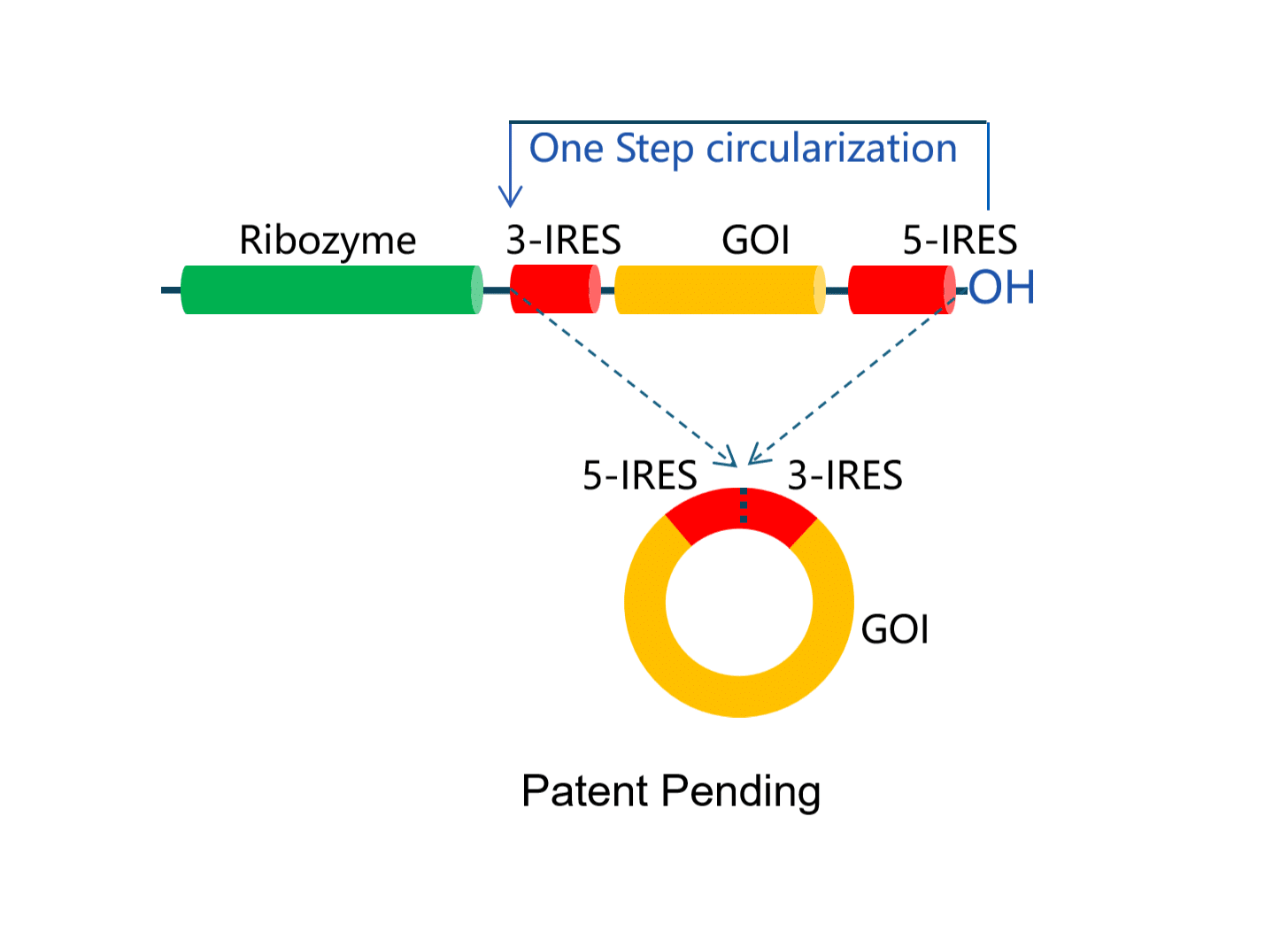
Fig. 1. circRNA template design diagram.
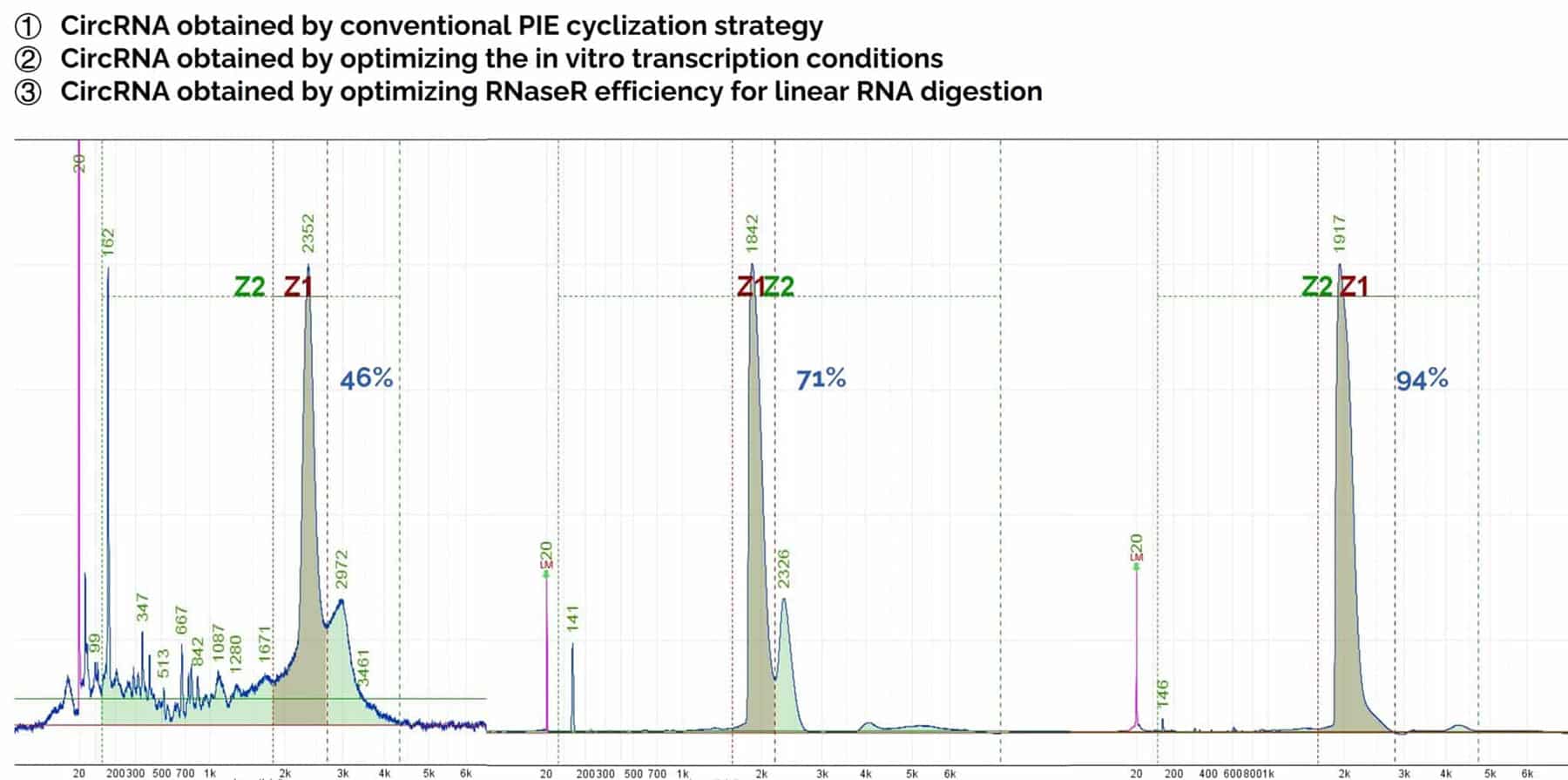
Fig. 2. circRNA purity. Using the conventional PIE strategy, circRNA purity is 46%. After optimizing mRNA in vitro transcription and RNaseR efficiency to remove linear RNA, circRNA purity exceeds 90%.


Fig. 3. Protein expression of circRNA and mRNA. Same amount of eGFP RNA-LNPs (circRNA-LNP, mRNA-LNP respectively) were added to HEK293 cells. Fluorescent images were taken 24 hours and 48 hours post the treatment. The bottom graph shows the quantification of fluorescence intensity in RNA-LNP treated cells.

Lipid nanoparticles containing NeonGreen-teLuc saRNA, circRNA, and linear mRNA (1 pmol / 1E5 cells) were added to HEK293 cells, and Bioluminescence quantification was performed up to 16 days post-treatment.
Redefining RNA Therapeutics: GMP RNA-LNP Manufacturing You Can Trust
Learn about CAR-T production process & regulatory guidelines.
Unlock safer regenerative therapies with Genome-Safe iPSC RPM for clinical success.
Explore RNA drug development fundamentals and the vital role of IVT in manufacturing.
circRNA has a covalently closed structure that can provide greater RNA stability and potentially support longer-lasting protein expression than linear mRNA in some applications. Unlike conventional mRNA, circRNA does not require a 5′ cap for translation and can use internal ribosome entry sites (IRES) to support cap-independent translation. CircRNA may also reduce activation of certain innate immune pathways compared with some linear RNA formats, although immune response depends on sequence, purification, formulation, and biological context. uBriGene supports circRNA manufacturing and circRNA-LNP formulation for research and therapeutic development.
uBriGene can provide circRNA as a standalone RNA product in single tubes, suspended in nuclease-free water at 1 mg/mL. CircRNA-LNP products can also be supplied in single tubes using Tris buffer or PBS, with an RNA concentration of 0.1 mg/mL. Final format and concentration can be determined according to project requirements.
uBriGene supports circRNA production ranging from approximately 100 to 4,000 nucleotides in length. CircRNA longer than 4,000 nucleotides may also be possible depending on the construct, sequence design, circularization efficiency, and process requirements. Longer or more complex constructs may require additional process optimization.
uBriGene supports both research-grade circRNA production and GMP circRNA manufacturing for clinical development programs. The platform supports circRNA production, circRNA-LNP formulation, process development, analytical testing, and GMP manufacturing according to project requirements.
uBriGene supports scalable circRNA production, from 100 ug up to grams of circRNA-LNP products, with scale and batch requirements determined by the RNA construct, process, formulation, and development stage. GMP manufacturing scale is established according to the specific program and manufacturing requirements.
uBriGene's circRNA manufacturing process includes DNA template preparation, in vitro transcription, RNA circularization using the PIE method, and downstream purification to remove linear RNA and other impurities. The process can include RNase R treatment, SEC chromatography, and TFF concentration before analytical testing and, when required, LNP encapsulation.
uBriGene reports greater than 90% circRNA purity, with up to 94% reported under optimized process conditions. Purity depends on the RNA sequence, circularization efficiency, downstream purification, and analytical method, so reported results should not be treated as a guaranteed specification for every construct.
uBriGene evaluates circRNA purity and circularization efficiency using analytical methods including HPLC and capillary electrophoresis (CE). Additional testing can assess residual DNA template, RNase R, dsRNA, and other process-related impurities to characterize the circRNA product.
A short residual sequence can remain after circularization depending on the circularization strategy and construct design. The specific sequence and its potential impact should be evaluated for each circRNA construct. uBriGene can assess the resulting circRNA product using appropriate analytical methods as part of process development and characterization.
GMP circRNA QC can include sequence identity, concentration, purity, circularization efficiency, residual DNA and RNase R, dsRNA, potency, sterility, and endotoxin. For circRNA-LNP products, additional characterization can include particle size, polydispersity, RNA concentration, encapsulation efficiency, potency, sterility, endotoxin, and other product-specific physical and chemical attributes. The final QC panel is defined according to the product and development requirements.
Yes. uBriGene provides circRNA-LNP formulation and manufacturing, including LNP process development, microfluidic encapsulation, scale-up, and product characterization. Analytical evaluation can include encapsulation efficiency, particle size, polydispersity, RNA concentration, and other physical and chemical attributes. Formulation conditions are optimized according to the circRNA construct and intended application.
Yes. uBriGene supports circRNA and circRNA-LNP process development, including RNA circularization, downstream purification, analytical method development, LNP formulation, scale-up, technology transfer, and GMP manufacturing preparation. Development activities can be tailored to the construct, formulation, and intended development stage.
uBriGene supports GMP circRNA-LNP programs for global development and regulatory pathways, with regulatory support covering jurisdictions including the FDA, EMA, Health Canada, TGA, and NMPA standards. Its platform includes GMP manufacturing, analytical testing, process development, and regulatory support for RNA-based therapeutic programs. The Germantown, Maryland facility maintains active FDA DMF #31266, supporting regulatory discussions and development programs involving the site.
When selecting a GMP circRNA-LNP manufacturing partner, consider circRNA circularization and purification capabilities, analytical methods for purity and circularization efficiency, LNP formulation and encapsulation capabilities, process development, scale-up, GMP manufacturing experience, and technology transfer. uBriGene supports these activities through its circRNA and circRNA-LNP platform, including PIE-based circularization, downstream purification, LNP formulation, analytical testing, and GMP manufacturing.
Extensive expertise with a track record of successfully releasing over 20 GMP batches of mRNA-LNP.
Cost-effective
Reduced timeline
Sit aliquam elit vitae bibendum lectus blandit dictum. Nisi porta elementum sed diam eleifend pellentesque. Quis aenean quam.
Ask the Expert