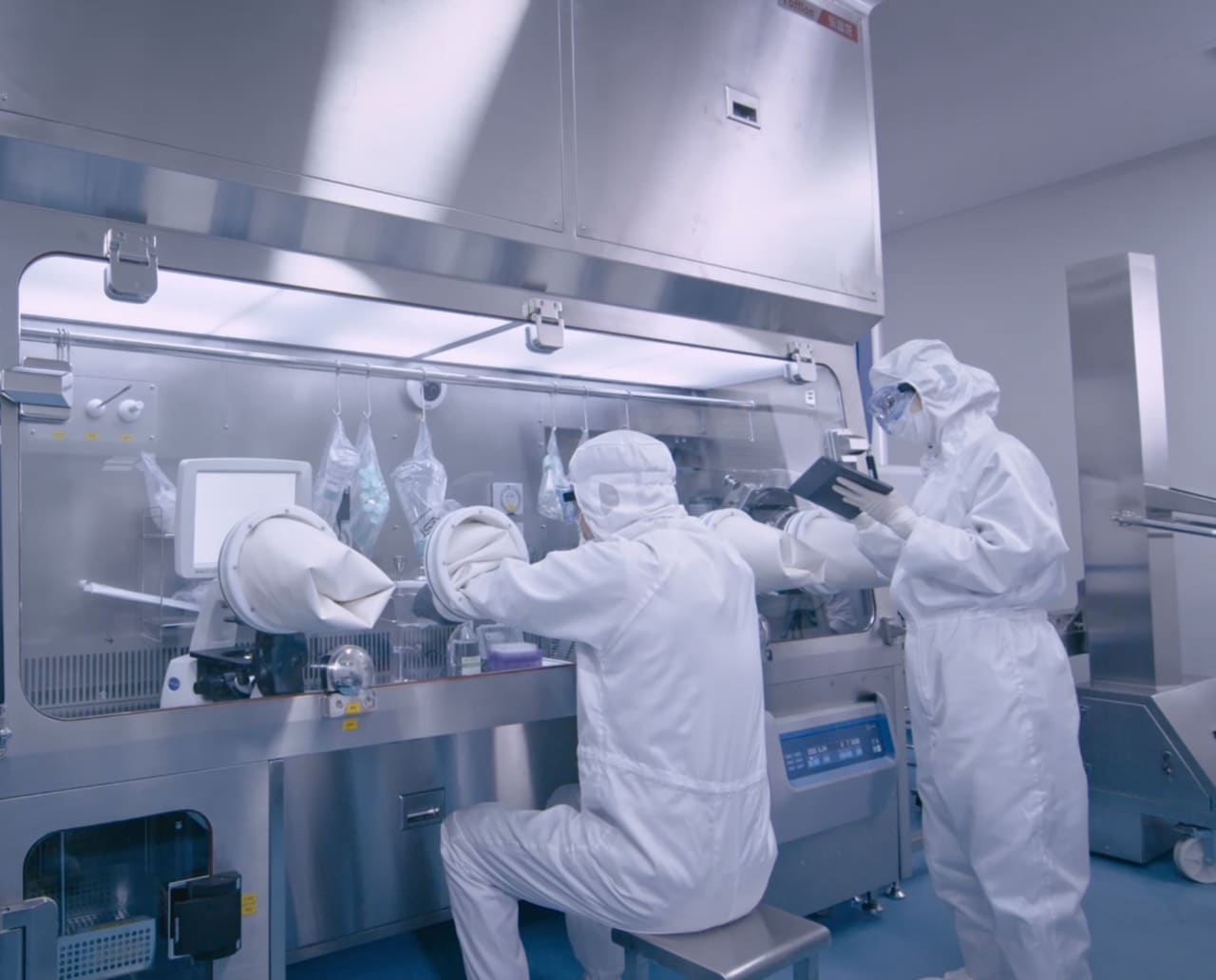
CAR-T and CAR-NK manufacturing workflows with qualified raw materials and gene-modification platforms, meeting the highest regulatory standards.

Our GMP workflows support the manufacturing of CAR-T and CAR-NK therapies. With extensive experience in GMP manufacturing and release, our skilled technical and regulatory teams ensure compliance with FDA, EMA, NMPA, Health Canada, and TGA standards.


Consult with us for seamless IND submissions, regulatory compliance, and cutting-edge technology in CAR-NK and CAR-T CDMO manufacturing services.
Sit aliquam elit vitae bibendum lectus blandit dictum. Nisi porta elementum sed diam eleifend pellentesque. Quis aenean quam.
Request a Consultation

Automated closed-system technology for manufacturing ensures sterility with functionally closed disposables, minimizes operator errors through pre-programmed steps, and enhances consistency by reducing variability. It also reduces technician hands-on time and lowers production costs.
These advantages not only improve the efficiency and reliability of the manufacturing process but also ensure a more cost-effective production of cells.
Our mature, 3rd generation lentivirus platform offers client access to qualified 293T cell banks and FDA-registered helper plasmids, accelerating development and manufacturing. We also offer multiple RNA platforms for CAR-T and CAR-NK products, including mRNA, circRNA, and saRNA LNP manufacturing.
Our analytical teams develop and perform potency assays and LVV/RNA-specific methods, routinely releasing GMP products with in-house assays. Additionally, our GMP plasmid platform efficiently and cost-effectively produces all necessary lentivirus plasmids or RNA templates.

Diagram of CAR-T/CAR-NK gene modification tools. Plasmids, RNA-LNP (including mRNA, circRNA, and saRNA LNP), lentiviral vectors, and CRISPR gene editing may be used to genetically modify T cells and NK cells, producing the final CAR-T and CAR-NK for therapeutic applications.
Request a quoteOur GMP CAR-T and CAR-NK manufacturing platform leverages lentivirus and CRISPR gene editing to generate targeted therapies. Our approach begins with the receipt of leukapheresis products, followed by the enrichment and activation of target cell populations. We then proceed with genetic modification via lentiviral transduction or RNA, ensuring precise expression of chimeric antigen receptors (CARs).
After transduction, the modified CAR cells undergo expansion in bioreactors or culture bags to achieve a sufficient quantity for treatment. The process concludes with washing, harvesting, formulation, and cryopreservation, maintaining sterility through aseptic filling techniques. Comprehensive quality control tests are conducted throughout to ensure compliance with GMP standards. Additionally, our platform includes the optimization of protocols to improve process closure and adaptation from academic or research-grade processes to GMP standards.
 Request a Quote
uBriGene provides in-house and custom assays for CAR-T and CAR-NK process development, including QC release and stability tests. Our CAR-NK and CAR-T CDMO services ensure safety, efficacy, and consistency through rigorous quality assurance and control, adhering to the highest industry standards.
We also have Raji cells that stably express the luciferase gene, making them an excellent tool for CAR-T cell-killing potency assays.
| Test Item | Method | |
|---|---|---|
| Identity | Sanger sequencing | |
| Physical /chemical properties | Appearance | Visual inspection |
| pH | pH measurement | |
| Osmolarity | Freezing-point depression test | |
| Strength | Cell viability | Cell counter |
| CAR transduction efficiency | Flow cytometry | |
| Cell killing assay | Flow cytometry | |
| CAR copy number | qPCR | |
| Purity | BSA Residuals | ELISA |
| E1A residuals | qPCR | |
| SV40 residuals | qPCR | |
| RetroNectin residuals | ELISA | |
| Magnetic beads Residuals | Microscopy | |
| Bovine serum albumin residuals | ELISA | |
| Safety | Endotoxin | Gel-clot assay |
| Sterility | Membrane filtration method | |
| Mycoplasma | Culture method | |
| Replication competent virus | PCR | |
*Outsourced testing
uBriGene's CAR-NK and CAR-T CDMO services are highly customizable to meet specific therapeutic needs. Our approach includes:
Tailored Process Designs: Customized for optimal performance and efficacy.
Flexible CAR Delivery: Options include plasmid DNA, LVV, RVV, mRNA/LNP, and gene editing.
Comprehensive Testing: Ensuring quality and safety with CAR gene identification, transduction efficiency, potency testing, and sterility checks.
The advantages of membrane matrix in downstream chromatography for plasmid purification include requiring only 30% of the time compared to conventional resin. Therefore, plasmid DNA is manufactured faster and at a much lower cost.
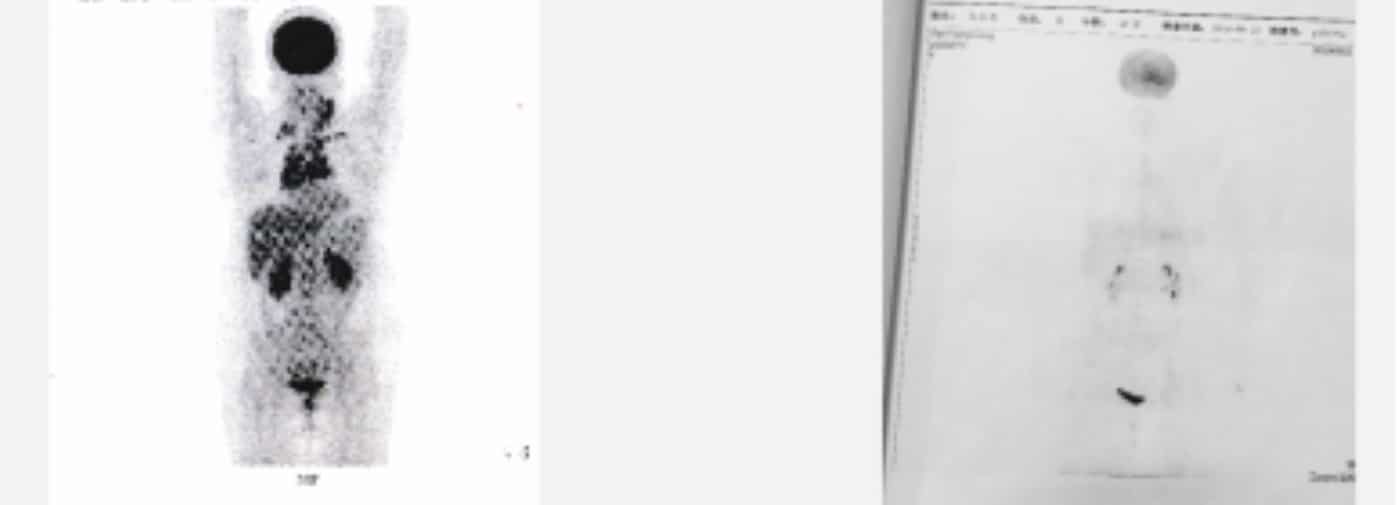
Symptom Onset: 2015
Clinical Diagnosis: Refractory relapsed Hodgkin’s lymphoma, CD30 positive.
Treatment: Autologous anti-CD30 CAR-T cell therapy.
Clinical Efficacy: Complete remission 1.5 years post-infusion. The patient returned to a high quality of life 2 years after completing the CAR-T cell treatment regime.

Symptom Onset: July 2017
Clinical Diagnosis: Refractory relapsed Hodgkin lymphoma, CD30 positive.
Treatment: Autologous anti-CD30 CAR-T cell therapy.
Clinical Efficacy: The patient was in remission 2.5 months after infusion initiation, with PET-CT scans showing complete dissipation in 2018. The patient had no adverse reactions to treatment, such as cytokine storm or neurotoxicity. The patient has returned to normal and has a high quality of life.
 Ask the CAR-T & CAR-NK Expert
Explore the basics of CAR-T therapies, from foundations to manufacturing.
Learn more about our CAR-T CDMO manufacturing for high-quality therapies.
Discover Lentivirus (LVV) production processes and testing.
Learn how to accelerate the development of iPSC-derived cell therapies.
The core manufacturing workflow for a CAR-T or CAR-NK batch can take approximately two weeks, depending on the product and process. The overall timeline from cell collection to release may be longer because it can include starting-material logistics, process or analytical development, release testing, and other program-specific requirements. Actual timelines are established based on the therapeutic product and manufacturing strategy.
CAR-T and CAR-NK therapies both use genetically modified immune cells expressing chimeric antigen receptors (CARs), but they are based on different cell types. CAR-T therapies use T cells, while CAR-NK therapies use natural killer (NK) cells, which have distinct biological properties and mechanisms of cytotoxicity. Both approaches can be developed as autologous or allogeneic products, depending on the therapeutic strategy and manufacturing model.
CAR-T and CAR-NK cells can be genetically modified using viral or non-viral gene-delivery and gene-editing approaches, depending on the therapeutic design and manufacturing strategy. uBriGene supports multiple approaches, including third-generation lentiviral vectors, plasmid DNA, mRNA-LNP, circRNA-LNP, saRNA-LNP, and CRISPR gene editing using Cas proteins, Cas mRNA, and sgRNA. The appropriate approach depends on the cell type, desired genetic modification, product design, and development stage.
uBriGene supports GMP CAR-T and CAR-NK manufacturing programs intended for development across multiple regulatory jurisdictions, including the U.S., Europe, Canada, Australia, and China. Its GMP facilities and quality systems are designed to support applicable regional requirements, documentation, technology transfer, and regulatory activities. The Germantown, Maryland facility maintains active FDA DMF #31266, providing CMC information for applicable regulatory programs.
Autologous CAR-T manufacturing uses T cells collected from the individual patient, with manufacturing performed for that patient. Allogeneic CAR-T manufacturing uses cells from a donor and can support development of an off-the-shelf product. The two approaches differ in starting material, manufacturing workflow, genetic modification, expansion, release testing, and product-specific safety considerations. uBriGene supports both autologous and allogeneic CAR-T and CAR-NK manufacturing programs.
The GMP CAR-T or CAR-NK manufacturing workflow can include receipt of leukapheresis material, target-cell enrichment and activation, genetic modification, cell expansion, washing, harvesting, formulation, cryopreservation, aseptic processing, and QC release. The specific workflow and process controls are customized to the therapeutic product, starting material, and manufacturing strategy.
GMP CAR-T and CAR-NK QC can include identity, viability, CAR transduction efficiency, cell-killing potency, CAR copy number, residual process materials, endotoxin, sterility, mycoplasma, and replication-competent virus testing. The final testing panel and release specifications are established according to the therapeutic product, manufacturing process, and applicable regulatory requirements.
CAR-T and CAR-NK potency is assessed using product-specific functional assays that measure the cells’ intended biological activity. Depending on the product and mechanism of action, assays may evaluate target-cell killing, activation, cytokine production, proliferation, or other relevant functional responses. For CAR-T cell-killing potency testing, uBriGene uses Raji cells that stably express luciferase as a target-cell model and can develop customized potency assays based on the therapeutic product and mechanism of action.
Yes. uBriGene supports CAR-T and CAR-NK programs from process development and optimization through GMP manufacturing, including gene modification, cell expansion, analytical method development, QC release testing, and technology transfer. The platform can also support adaptation of research or academic workflows toward more controlled GMP manufacturing processes.
uBriGene has delivered more than 100 GMP CAR-T batches and has supported CAR-T programs through IND filings and clinical development, including autologous and allogeneic manufacturing. Its capabilities include gene modification, cell expansion, analytical development, QC release testing, and GMP manufacturing. uBriGene has also supported clinical CAR-T programs, including autologous anti-CD30 CAR-T manufacturing for patients with refractory or relapsed Hodgkin lymphoma.
GMP CAR-T and CAR-NK manufacturing costs depend on factors such as cell source, autologous or allogeneic workflow, genetic modification method, batch scale, process development, analytical testing, release requirements, and manufacturing scope. Additional gene-editing, potency, or regulatory activities can also affect cost. Pricing is therefore established according to the specific product and development stage. Request a quote
Take the next step in your CAR journey. Discuss your project requirements and see how our CAR-NK & CAR-T CDMO services can support your goals.
Sit aliquam elit vitae bibendum lectus blandit dictum. Nisi porta elementum sed diam eleifend pellentesque. Quis aenean quam.
Request a Quote